Posts

Showing posts with the label bird

Golden Hawk - Colored Pencil Drawing
Image
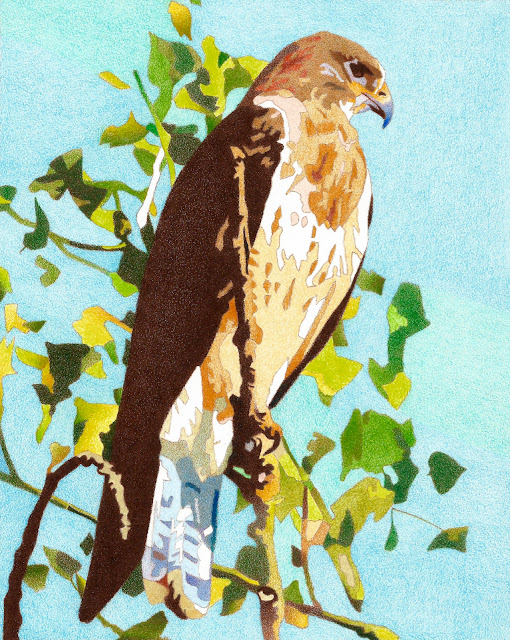
"Golden Hawk" Colored Pencil Perched on a high throne decorated with a wreath of autumn leaves, a golden hawk gazes over a vast empire. The royal color scheme of blue and gold is applied in patches of similar value, resulting in a posterized portrait. Highlights and shadows are downplayed as the abstract contours exaggerate the drawing’s obvious two-dimensionality. The resplendent creature is static and solid suggesting a timeless permanence that symbolizes confidence, power and freedom. This piece does not portray a specific individual but it is more of a generic representation of a dazzling species that is so often overlooked. The monarch’s feathers are barely insinuated and the tail stripes are reduced to a simple pattern. The long, dark wing is devoid of detail, the ochre bib promotes a sand-colored chest and the yellow feet, equipped with sharp talons, melt into the mosaic of foliage. Cut out of a powder-blue sky, the noble profile of a bronze head is adorned
Wilson's Snipe - A Feathered Phantom

Image
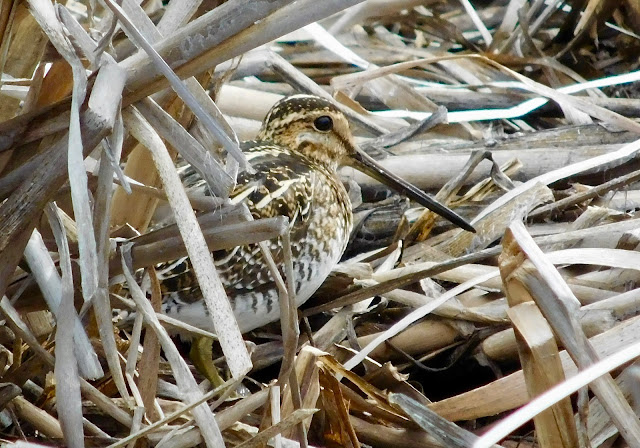
The Wilson's Snipe The reclusive Wilson’s snipe lives in North America but you'd be lucky to ever lay eyes on one. Because of his secretive nature, he’s most active around dusk and dawn while preferring to sleep much of the daytime. When he's awake this plump, little shorebird uses his long, flexible bill to probe in the mud for larvae and earthworms. His unique mandible can move independently upwards allowing him to swallow small prey without having to pull his bill out of the dirt. The Wilson’s snipe is mottled brown overall with a white belly and streaked breast. Dark stripes decorate his head and back. He makes his nest in the wetlands where his drab plumage blends perfectly into the dried, cattail willows. His bill is outrageously long and his eyes are set so far back on his head that he can see not only in front and to the sides but also completely behind. He has short legs and massive flight muscles so when he’s flushed from his safe haven he can explode i

Song Sparrow - A Distinguished Neighbor

Image
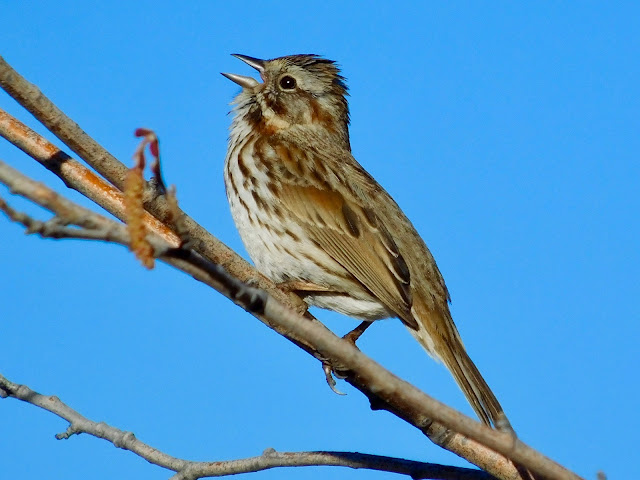
Song Sparrow In the soggy marshland surrounding Evergreen Lake he sings his heart out. His sweet music includes twenty different tunes and at least 1,000 improvised variations so it’s no wonder they call him the song sparrow. Full of complex rhythm and emotion, his colorful vocalizations are used to attract females and defend territory. His unique, prolonged melody distinguishes him as a neighbor rather than a stranger. This common sparrow is an adaptable bird whose behavior and appearance is extremely variable and unpredictable. He is found throughout North America but individuals from different regions look completely different from each other. In our neck of the woods, the song sparrow is described by brown, heavily streaked plumage, a mottled back and a white throat. His face is gray with a dark eye line and a white jaw line while his reddish crown has a neat gray stripe. The female builds a nest that’s usually concealed somewhere near the ground but he does help colle

Barn Swallow - A Herald of Spring

Image
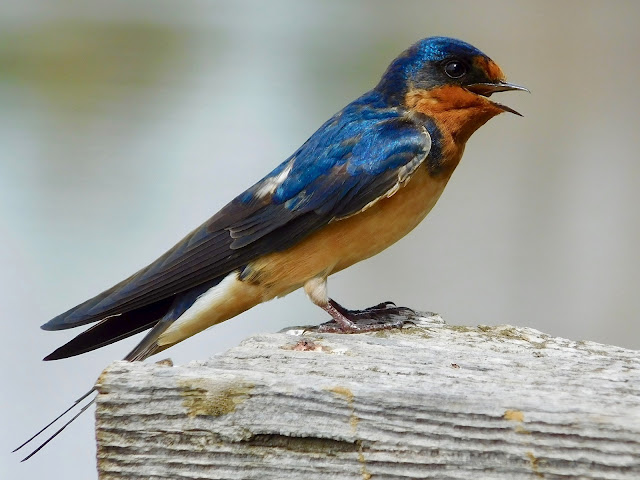
Barn Swallow According to legend, the barn swallow got its forked tail because it stole fire from the gods to bring to humans. An angry deity hurled a fireball at the swallow, burning away it’s middle tail feathers. It has distinguished itself as the most familiar swallow in North America and the most widespread swallow in the world. It’s a welcome neighbor as it eats insects and often builds its mud nest under the eaves of man-made structures. The barn swallow is identified by that deeply forked tail, a vermillion throat and forehead, blue upper parts and ochre underparts. It prefers to live near a river, lake or marsh where it can find its favorite food - bugs. A supreme aviator, the barn swallow displays a spectacular array of acrobatics in order to eat, drink and bathe while still on the wing. It’s truly a free bird whose daring flight is both delightful and unpredictable. The barn swallow is a devoted parent who fiercely defends its young with relentless dive bombing.

American Avocet - An Elegant Glow

Image
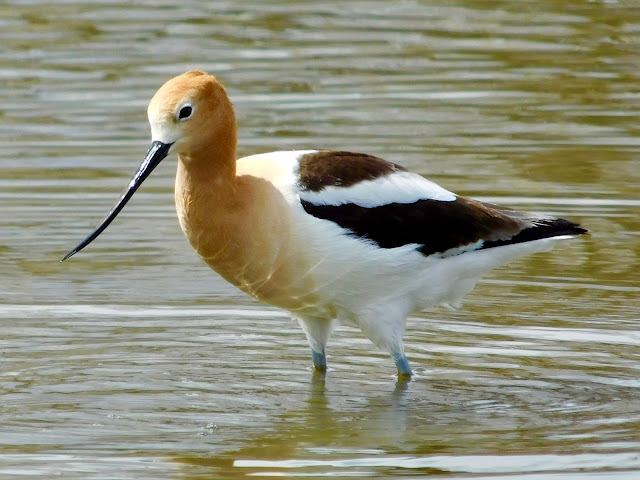
American Avocet The name Avocet comes from the Italian avosetta, which means ‘graceful bird'. If your looking for the American version of this graceful bird, you’ll find him foraging in the shallow marshes scattered throughout the wide open west. It’s easy to confirm his identity because of his distinctive features and striking colors. His sleek, white body is set upon a pair of long, blue legs and he has solid black wings broken by a broad, white bar. The Avocet has an outrageously long, recurved, black bill but his exquisite coloring is what really sets him apart. During breeding season his head, neck and breast is shaded in soft peach while in the winter those same areas are filled gray. He’s a common shore bird whose breeding grounds are often located along the lower fringes of the Rocky Mountains. He wades across the wetlands scything - sweeping his bill side to side through the water’s surface while feeding on tiny crustaceans and aquatic insects. He and his mate

Hooded Merganser - Positively Flamboyant

Image
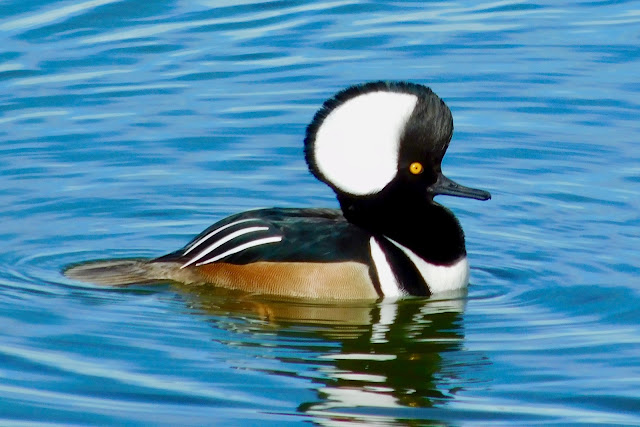
Hooded Merganser The hooded merganser is a secretive creature that prefers to live in a secluded woodland somewhere near a small pond or stream. A mated pair nests in a cavity of either a live or dead tree where the female lays a clutch of seven to fifteen eggs. Remarkably, the fuzzy hatchlings leave the nest within 24 hours after they hatch. Upon reaching open water, the tiny youngsters begin diving and foraging immediately but remain close to mom for warmth and protection. The hooded merganser is a diving predator and the only duck that specializes in capturing fish. They’re able to track down food by sight because their eyes are specially adapted for unsurpassed underwater vision. These speedy, little ducks are found almost exclusively in North America. They must like it here because even during the spring and fall their migration routes are usually just a short distance. Perhaps the most distinguishing characteristic is their striking appearance as both male and female