Posts

Showing posts with the label monument

Agate Fossil Beds - A Land That Time Forgot
Image
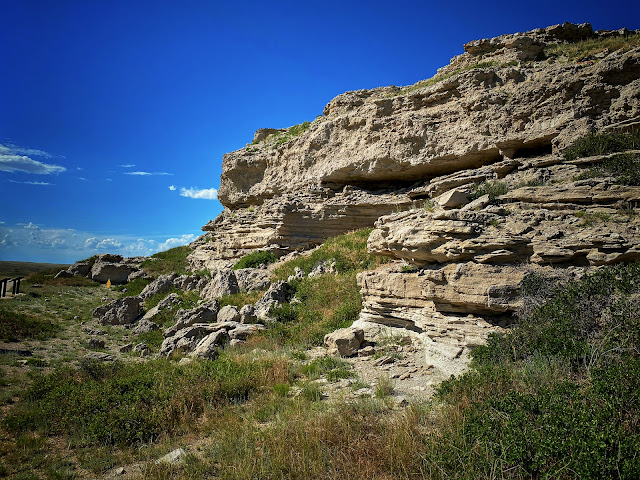
Agate Fossil Beds Unearthed in the panhandle that is western Nebraska, the Agate Fossil Beds are a fascinating monument documenting ancient history. From the associated museum, a steep, 3-mile trail leads up to Fossil Hills where the old dig site can still be seen. At the end of the dinosaurs, 65 million years ago, this area was a tropical lowland and mammals began to emerge. Volcanic activity was intense and a range of mountains started to form in the west while the climate became cooler and drier, transforming the region into a great savanna where immense herds of animals grazed on lush grasses. Common species on the prairie were Palaeocastor - a dry land beaver, Moropus - a distant relative of the horse, Menoceras - a three-foot-tall rhino and Stenomylus - a tiny gazelle-camel. Carnivores evolved to prey on these plains-dwellers the most notorious of which were Daphoenodon - a fearsome beardog and Dinohyus - a terrible hog endowed with bone-crushing teeth enabling it to scavenge
Spirit of Winter - Colored Pencil Drawing

Image
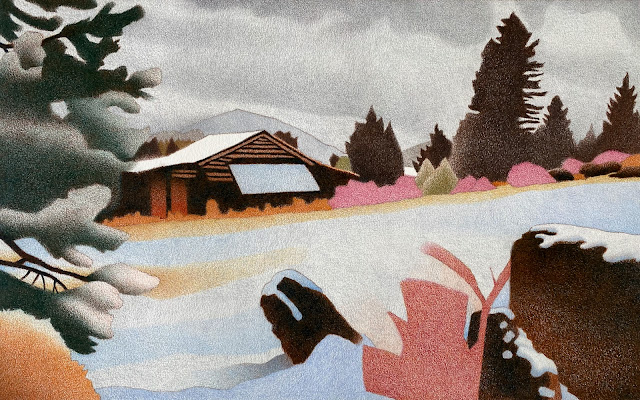
"Spirit of Winter" Colored Pencil This time of year, a never ending cycle of storms sweeps down from the mountains burying the foothills in a frozen tomb. The ice cold essence seeps into your aching bones and the chill doesn’t thaw until late spring. Despite the season’s harshness, the artist is lured into an attempt to capture the mysterious poetry evoked by such an austere landscape. In defiance of the somber setting, a palette of unexpected hues is required to accomplish the task. Interred in eternal snow, a woodland valley is hauntingly diffused with the spirit of winter. Jutting out of the ground, dark menhirs are scattered across the meadow, making the composition’s structure seem monumental. The deserted cabin is evidence of a recurring saga about the struggle between this area’s inhabitants and the environment. A phantom peak, pyramidal in shape, complements the strict geometry of the shelter. The faltering shack is gradually being reclaimed by the land so its

Red Pyramid - Colored Pencil Drawing

Image
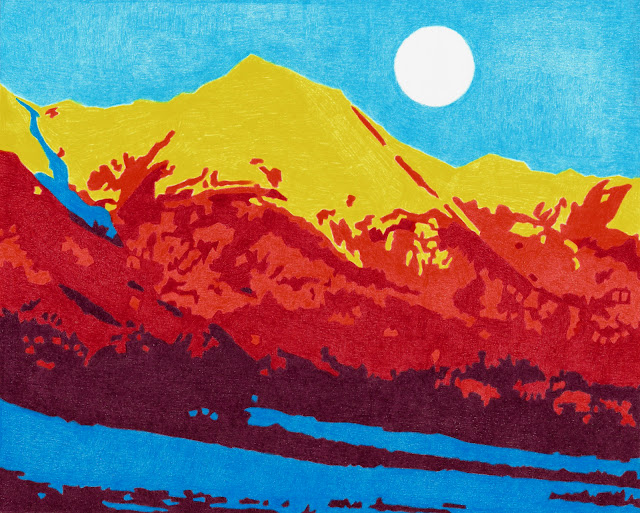
"Red Pyramid" Colored Pencil Constructed miraculously by the powerful forces of nature, the Red Pyramid is an extraordinary edifice rising above a remote, desert plateau. The sacred structure embodies magnificence as its eternal grandeur has survived the flow of immeasurable time. A symbol of rural culture, the perfectly shaped monolith is a meaningful monument venerated by the region’s local inhabitants. Majestic and complex, the mysterious peak is a unique source of intellectual and social power. Steeped in divine superstition, the supernatural landscape is inextricably linked with the celestial. Echoing dignity and inspiring awe, the spiritual summit is a magical place to worship the unreachable mountain gods.

The National Mall - Museums, Monuments and Memorials

Image
The National Mall A few weeks ago I taught a colored pencil drawing class in Harpers Ferry, West Virginia. My family tagged along so after the weekend-long workshop, we decided to extend our stay and visit the National Mall in Washington, DC. Early Monday morning, during a severe thunderstorm that produced heavy rain and terrible flooding, we headed to Alexandria, Virginia. Upon arriving at our hotel, we hopped on the shuttle bound for Ronald Reagan Airport. From there we boarded a subway train that carried us into the metropolis. We emerged from the darkness of the Smithsonian Stop and stumbled on a concrete jungle that was choked with chaos and confusion. Still soaking wet from the persistent downpour, we went into the Natural History Museum first and were impressed by the lavish displays that filled the enormous halls. We examined hundreds of animal species, ancient fossils and impressive meteorites but the highlight of the collection was the astonishing Hope Diamond. O

Mount Rushmore - A Massive Memorial

Image
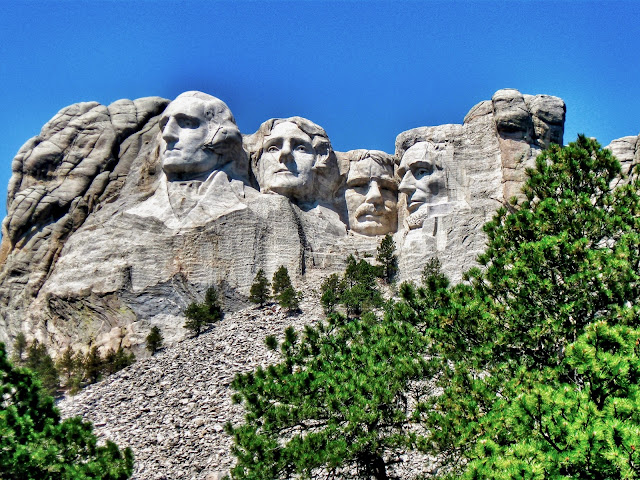
Mount Rushmore Exhibited near Rapid City, South Dakota, Mount Rushmore is a magnificent monument sculpted from a granite mountain. The massive memorial is a group portrait featuring presidents George Washington, Thomas Jefferson, Abraham Lincoln and Theodore Roosevelt. It took artist Gutzon Borglum 14 years to complete the government commission. Concealed in a sacred wilderness of rock and pine called the Black Hills, the creation looks unfinished but rough hewn edges give it a certain sketchiness that blends into the natural environment. Upon entering the busy complex, a grand boulevard leads to an amphitheater where the sculpture can be closely contemplated. Mount Rushmore definitely exudes patriotism and as an attraction luring tourists to the remote Northern Plains, the astonishing work of art is certainly a success.

Courthouse and Jail Rocks - Watercolor

Image
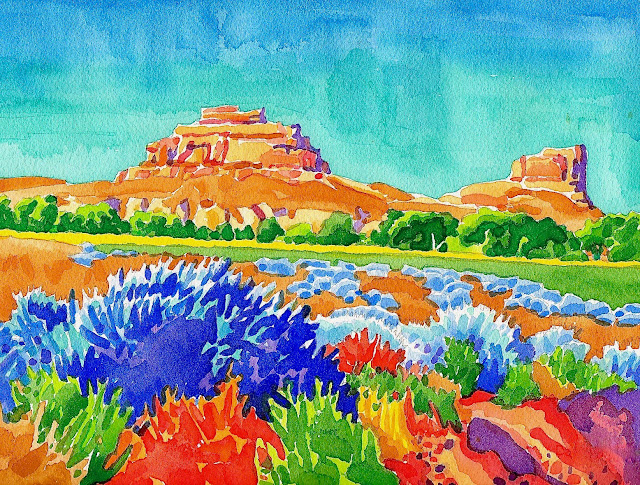
Courthouse and Jail Rocks - Watercolor It's a breezy, spring day in Western Nebraska. Courthouse and Jail Rocks tower above the open prairie. A row of stately cottonwoods traces the winding course of Pumpkin Creek while a field of fresh hay slices through rugged pastureland. The fiery foreground is accented by glittering, silver sagebrush. The cloudless sky is a deep blue as the unusual formation appears golden in the evening light and dark shadows define the bold geography. The steep south face is terraced like a Sumerian ziggurat and descends into a labyrinth of mysterious corridors, caves, tunnels and rattlesnake pits. Composed of Brule clay, Gering sandstone and ash, the rocks are erosional remnants of an ancient plateau formed by volcanic activity thousands of years ago. Later, they became an unforgettable natural landmark that guided emigrants during the 19th century's Westward Expansion. Back then, just passing near the monument offered hope to weary pioneers

Courthouse and Jail Rocks - Offering Inspiration

Image
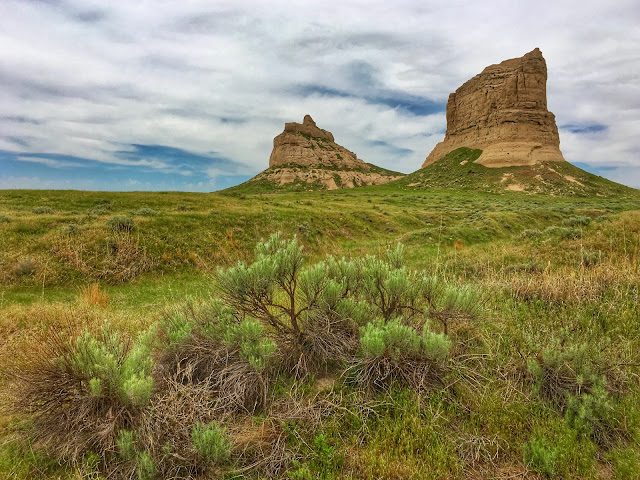
Courthouse and Jail Rocks “We came in sight early this morning of the "Courthouse," a hill, or immense mound, which strongly resembles such a building, with wings; it rests imposingly on a bluff; the sides are near a cream color, with apparently, a black roof.” ~ Phillip St. George Cooke (1845) Composed of Brule clay, Gering sandstone and ash, Courthouse and Jail Rocks are erosional remnants of an ancient plateau. They were formed by intense volcanic activity that happened thousands of years ago. The Rocks are located just south of Bridgeport, in the Nebraska panhandle, at the eastern terminus of the Wildcat Hills. The impressive landmark ascends 400 feet above the nearby North Platte River Valley. They’re an enduring symbol of the pioneer spirit, hope and home. During Westward Expansion, they were a famous benchmark as the Pony Express, Oregon, California and Mormon trails all passed by the geographic marvels. The formation was first noted by Robert Stuart, in 1

Little Bighorn Battlefield - Part III

Image
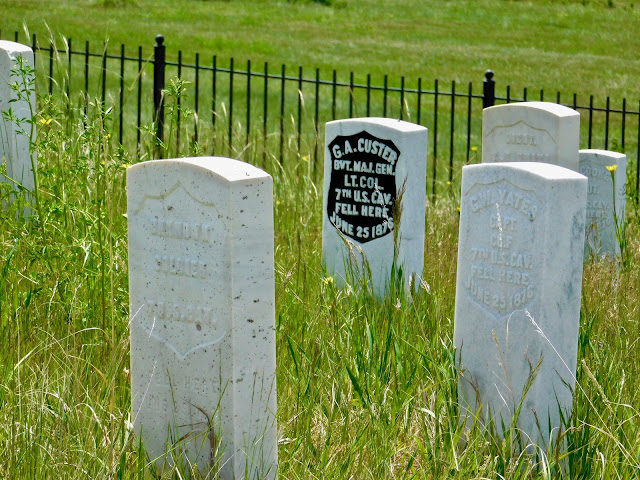
General Custer fell here After destroying Custer's entire battalion, the warriors raced south across the ridges to engage the last remnant of the Seventh Cavalry. Lying flat on the ground, the soldiers formed a perimeter of defense around a natural depression scooped out of the summit of their hilltop refuge. They managed to hold off a determined siege throughout the evening and into the darkness. Many of the spooked men recalled how down in the Indian village there was a celebration of dancing and singing that lasted all night. Desperate cries from captured soldiers who were being tortured below filtered eerily through the hills. Troopers who chose to hide in the timber rather than retreat, somehow worked their way back up to the relative safety of rejoining their comrades. By first light the next morning, the conflict resumed and the remaining 300 or so soldiers continued to hold the high ground. Incredibly, a group of volunteers even snuck down a steep ravine all the

Little Bighorn Battlefield - Part I

Image
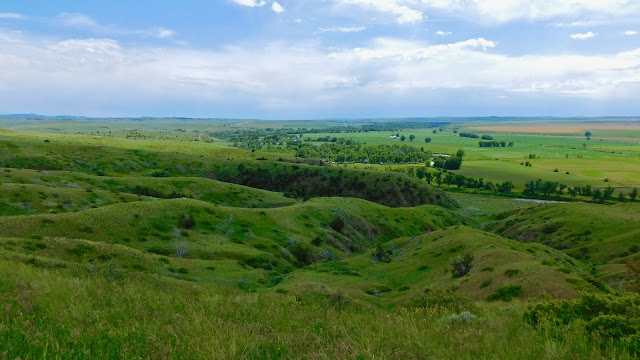
The Little Bighorn River Valley Located in south central Montana, the Little Bighorn Battlefield is a remarkable monument preserving a fascinating piece of American History. Here, General Custer and his battalion of 210 soldiers were massacred by a combined fighting force of Lakota and Cheyenne warriors. What makes this memorial so unique is the scattering of marble markers that pinpoint the exact location of where each of the soldiers were killed. The white headstones' seemingly random arrangement betrays the sobering story they have to tell. Upon approaching the Little Bighorn in early June, the spectacular scenery is as beautiful as any place on earth. Tall, green grass is windswept across the vast prairie of rolling hills that at one time supported thousands of buffalo. Upon reaching the river valley, the terrain becomes more rugged as high bluffs to the east are broken by deep ravines and wide coulees. The serpentine-shaped thread of silver water is narrow, cold and