Posts

Showing posts with the label song

Song Sparrow - A Distinguished Neighbor
Image
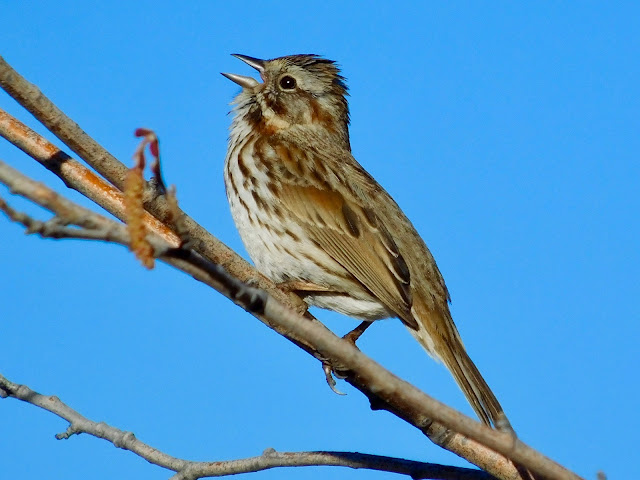
Song Sparrow In the soggy marshland surrounding Evergreen Lake he sings his heart out. His sweet music includes twenty different tunes and at least 1,000 improvised variations so it’s no wonder they call him the song sparrow. Full of complex rhythm and emotion, his colorful vocalizations are used to attract females and defend territory. His unique, prolonged melody distinguishes him as a neighbor rather than a stranger. This common sparrow is an adaptable bird whose behavior and appearance is extremely variable and unpredictable. He is found throughout North America but individuals from different regions look completely different from each other. In our neck of the woods, the song sparrow is described by brown, heavily streaked plumage, a mottled back and a white throat. His face is gray with a dark eye line and a white jaw line while his reddish crown has a neat gray stripe. The female builds a nest that’s usually concealed somewhere near the ground but he does help colle
Vesper Sparrow - A Happy Grass Dweller

Image
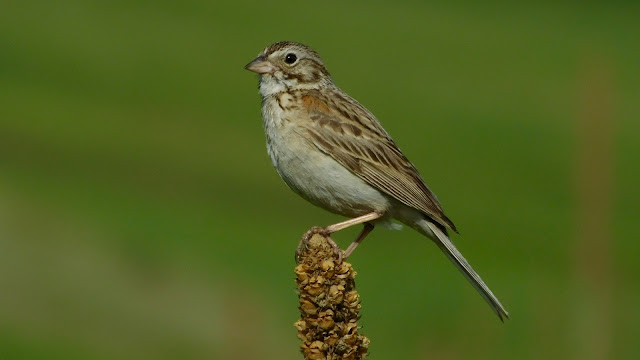
Vesper Sparrow So far this summer, the bird I’m seeing most frequently in our foothills is the decidedly nondescript vesper sparrow. His name is Latin for ‘evening’ a time when this bird loves to sing. At first glance, this stout sparrow looks rather drab but if you take the time to look closely, you’ll discover that he’s really quite beautiful. His overall light-brown color is intensified by a bright orange patch on the shoulder. A pattern of dark streaks helps him to blend perfectly into the environment. Barely visible in the vast meadow to even the keenest observer, his exuberant song is what gives his presence away. If you happen to cross paths with him, he’s not shy and he can be photographed rather easily. He tolerates a friendly encounter and watches curiously with his white-ringed eyes. He hops down the dirt trail searching for his favorite foods, insects and seeds. If you get too close though, he will flash his white outer tail feathers as he alights to a nearby m

Pikes Peak, Colorado

Image
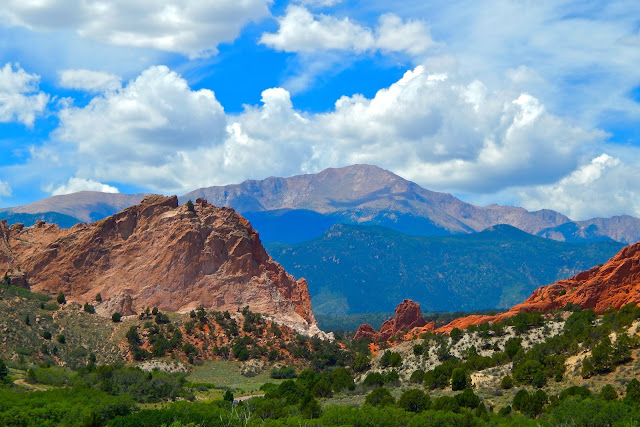
Pikes Peak, Colorado Dominating the view at Colorado Springs, Pikes Peak has been inspiring explorers, gold seekers and artists for over 200 years. It’s named after the accomplished adventurer Zebulon Pike who first beheld the majestic, purple mountain in 1806. When gold rushing 59ers set out for Denver in a quest for mineral riches, they emblazoned their wagons in fresh paint with the famous words "Pikes Peak or Bust!" The rocky monolith still commands the southern skyline and has become a lasting symbol for the entire Front Range. American songwriter Katharine Lee Bates was so influenced by the extraordinary vista from the summit that she wrote the lyrics to America the Beautiful . The popular anthem is actually a superb tribute to the unique beauty and vastness of the Colorado landscape.

Junco - A Woodland Snowbird

Image
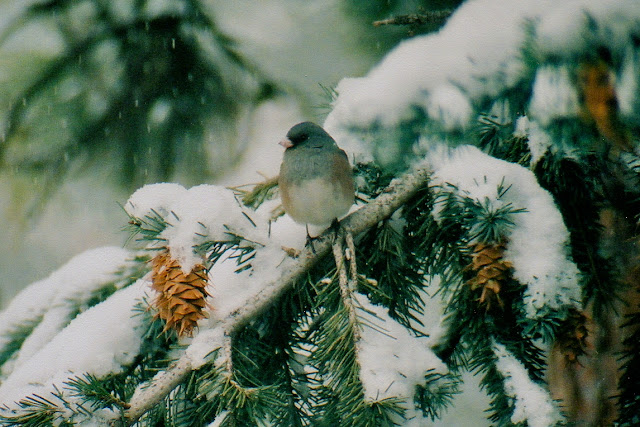
Dark-eyed Junco A dark-eyed junco is perched on an evergreen branch during a spring snowstorm. A year-round resident in Colorado, they are also sometimes called snowbirds because of their sudden, histrionic appearance below winter bird feeders. When it gets really cold, we see them mixed in with other small, seed-eating birds such as chickadees and nuthatches. Dark-eyed juncos are uncommon sparrows because they spend so much time on the ground. They nest on the forest floor and hop around the bases of trees and shrubs searching for fallen seeds. When flushed, their distinctive, bright-white tail feathers are flashed during takeoff. Juncos also have a unique call that is described by a Mrs. Lawrence in a note to famous ornithologist Arthur Cleveland Bent: "The lovely tinkling chorus by the juncos in early spring, as if a myriad of woodland sprites were shaking little bells in an intensive competition."