Posts

Showing posts with the label exploration

Harpers Ferry - The Epicenter of American History
Image
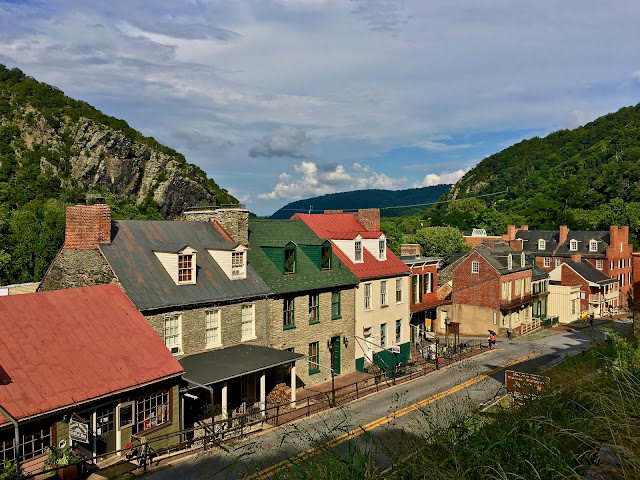
Harpers Ferry, West Virginia Harpers Ferry, West Virginia is nestled in the Blue Ridge Mountains at the confluence of the Potomac and Shenandoah Rivers. Established in 1763, the town was a vital hub situated at the epicenter of American History concerning transportation, industry, slavery and the Civil War. Thomas Jefferson visited the area in 1783 and upon seeing the dramatic gap in the mountains, he declared “the passage of the Potomac through the Blue Ridge is perhaps one of the most stupendous scenes in nature.” George Washington traveled there in 1794 and was impressed by the rugged beauty of the isolated outpost. Washington eventually chose Harpers Ferry as the site for a new national armory and by 1796 the U.S. military arsenal was established. Merchants, mechanics and immigrants flocked to the western Virginia township because of the commerce generated by the machine shops and rifle works factories. Probably the most famous event in the town’s rich history was aboli
Three Mountain Passes - The Crest of a Continent

Image
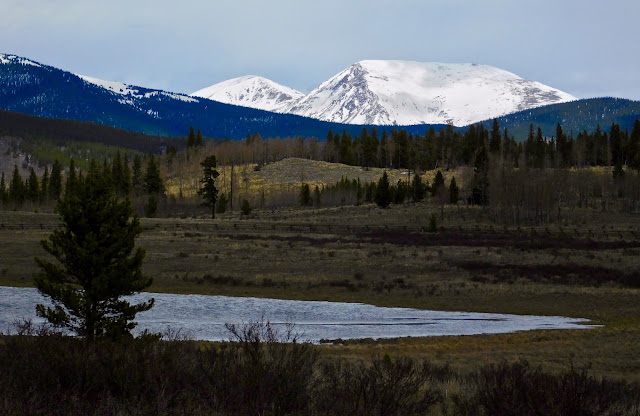
Kenosha Pass Recently, we explored three mountain passes that traverse the crest of a continent. It may be spring in the foothills but after a looping excursion through Colorado’s Front Range, we discovered that winter is still lingering in the high country. Kenosha Pass (10,000 feet) is a wide open space famous for its charming aspen grove and being bisected by the untamed Colorado Trail. The centerpiece of this grassy plateau has to be the sparkling blue lake that reflects the ring of white peaks that surrounds it. As it’s early spring here, the cool temperatures create persistent snow drifts that are scattered across the muddy earth. Kenosha Pass descends abruptly while forming the steep eastern boundary of the spectacular South Park meadow. Hoosier Pass (11,500 feet) is a narrow gateway to the town of Breckenridge renowned for its cluster of big mountains and rich mining history. The beautiful landscape is forested with a picturesque combination of subalpine fir and En

Moraine Park - Where Alpine Beauty Begins

Image
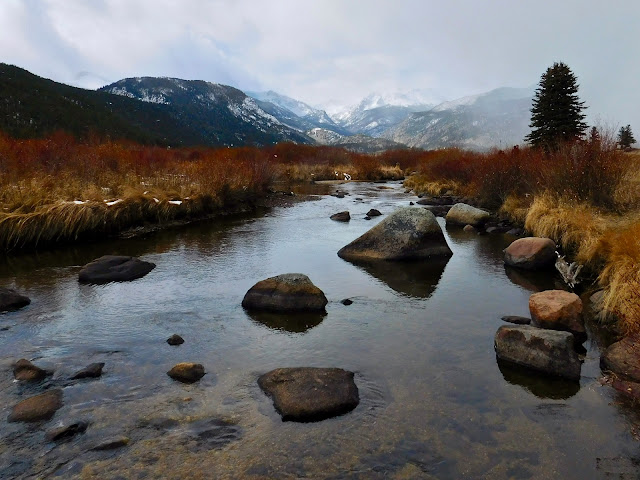
"Moraine Park" During the early winter, ice chips are sprayed down from the Great Divide into the Moraine Park Valley. Heavy clouds lurk towards the horizon erasing from view the big peaks that confine the isolated meadow. The glacial gorge was gradually created by the corrosive forces of ice, wind and rain. One of the eroded land’s last dynamic remnants is a wild, winding river known as the Big Thompson. At this point in its course, the creek meanders lazily through the gentle grassland. Some of the most distinguishing features are the protruding boulders that seem to stand upright during the season’s low tide. The yellow-ochre field is gouged by muddy, black banks that slide into the sandbars of rocky rubble. Tangled rows of red-violet willows adorn the deep fringes of this gorgeous waterway. It’s a heavenly region tucked away high in the northern Rockies where Colorado’s alpine beauty begins. As the grandeur continues to sprawl south, there are innumerable noo

Gore Range - The Shining Mountains

Image
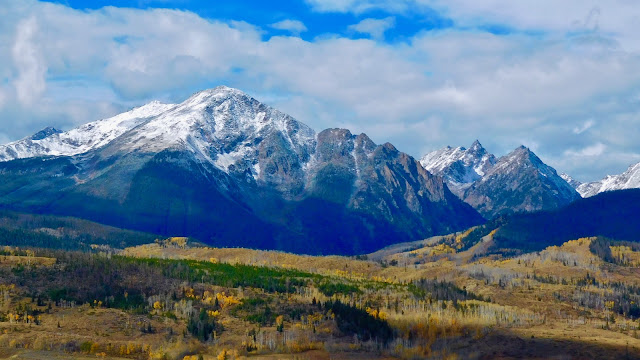
Gore Mountain Range If one studies a map of central Colorado, you’ll discover an assortment of topographic features that share a common nomenclature. The different landmarks are called Gore Wilderness Area, Gore Creek, Gore Canyon, Gore Pass and the spectacular Gore Mountain Range. I’ve always thought that was a cool title for a chain of craggy peaks because it evokes rugged imagery that makes me think of a shaggy buffalo bull or a pair of rutting elk. Losing yourself in those remote mountains has a therapeutic value that can restore your health but if you learn the true story behind the naming of that range - it will make you sick. During the first half of the 19th century, the northern plains were an isolated region inhabited by Native Americans but encroached upon by a few white mountain men and fur traders. And then in 1854, in a tragic preview of things to come, a wealthy European began tramping across what is now Colorado, Wyoming, Montana and the Dakotas, wreaking absol