Posts

Showing posts with the label marsh

Wilson's Snipe - A Feathered Phantom
Image
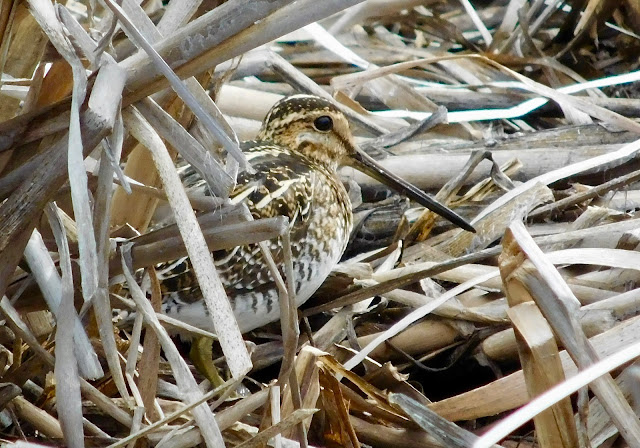
The Wilson's Snipe The reclusive Wilson’s snipe lives in North America but you'd be lucky to ever lay eyes on one. Because of his secretive nature, he’s most active around dusk and dawn while preferring to sleep much of the daytime. When he's awake this plump, little shorebird uses his long, flexible bill to probe in the mud for larvae and earthworms. His unique mandible can move independently upwards allowing him to swallow small prey without having to pull his bill out of the dirt. The Wilson’s snipe is mottled brown overall with a white belly and streaked breast. Dark stripes decorate his head and back. He makes his nest in the wetlands where his drab plumage blends perfectly into the dried, cattail willows. His bill is outrageously long and his eyes are set so far back on his head that he can see not only in front and to the sides but also completely behind. He has short legs and massive flight muscles so when he’s flushed from his safe haven he can explode i
American Avocet - An Elegant Glow

Image
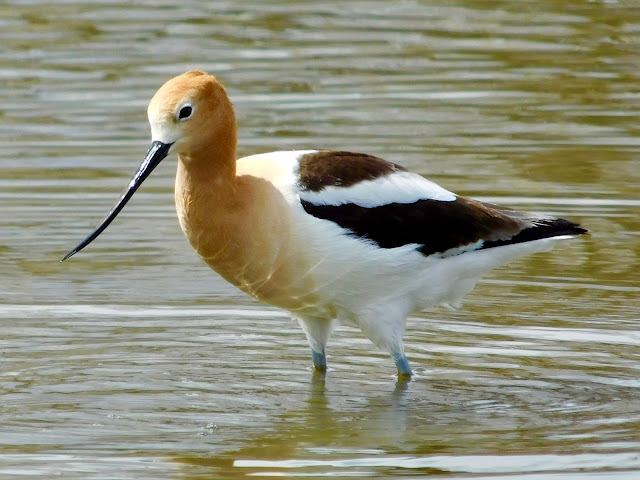
American Avocet The name Avocet comes from the Italian avosetta, which means ‘graceful bird'. If your looking for the American version of this graceful bird, you’ll find him foraging in the shallow marshes scattered throughout the wide open west. It’s easy to confirm his identity because of his distinctive features and striking colors. His sleek, white body is set upon a pair of long, blue legs and he has solid black wings broken by a broad, white bar. The Avocet has an outrageously long, recurved, black bill but his exquisite coloring is what really sets him apart. During breeding season his head, neck and breast is shaded in soft peach while in the winter those same areas are filled gray. He’s a common shore bird whose breeding grounds are often located along the lower fringes of the Rocky Mountains. He wades across the wetlands scything - sweeping his bill side to side through the water’s surface while feeding on tiny crustaceans and aquatic insects. He and his mate

Great Blue Heron - A Lanky Waterfowl

Image
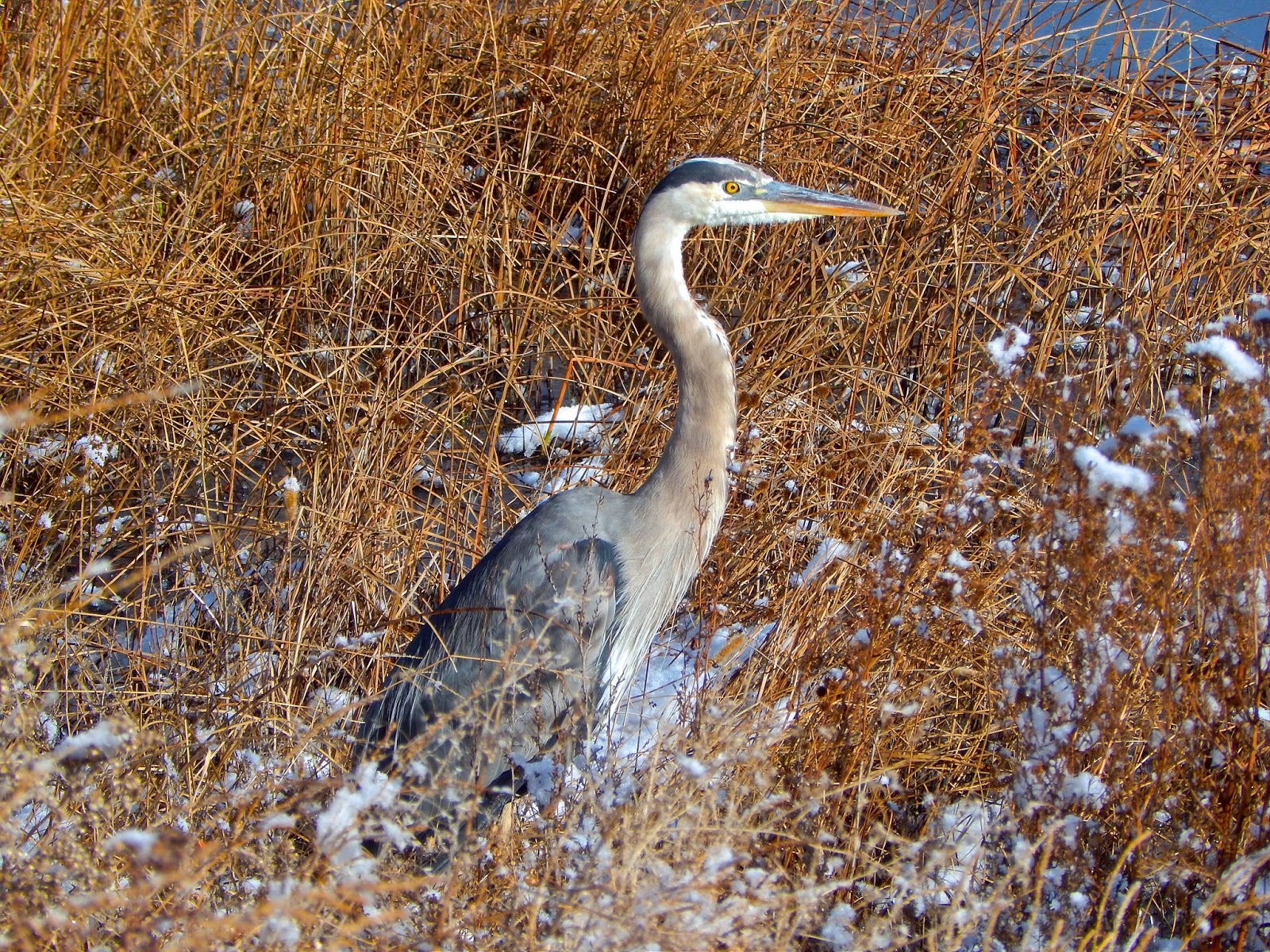
Great Blue Heron On a chilly winter day near Nebraska’s North Platte River, a great blue heron swooped in searching for prey. After a brisk feather-ruffle, it proceeded to patiently stroll along the shoreline of an icy pond. Sharp eyes scanned the water’s surface for small fish. With its sinewy neck coiled into the shape of an S, the big bird was ready to strike. A long, dagger-like beak would deliver the final death blow. After an unsuccessful hunt, the lanky waterfowl became annoyed with the uninvited intruder. It promptly straightened up, delivered a harsh croak and soared swiftly to the safety of a nearby cottonwood stand. A chilly winter day Searching for prey Ruffled feathers Patiently strolling Sharp eyes A sinewy neck Coiled into the shape of an S An unsuccessful hunt A lanky waterfowl Straightened up

Red-winged Blackbird - Colored Pencil Drawing

Image
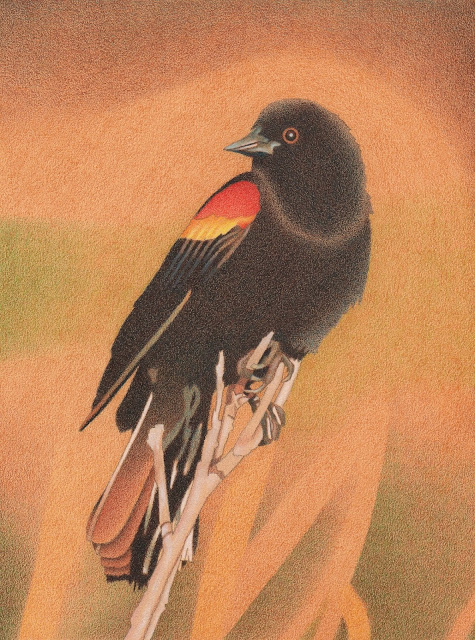
"Red-winged Blackbird" Colored Pencil On a chilly morning in the mountains, a red-winged blackbird poses before it’s soggy marsh. Nesting in cattails just above waterline, the protective parent will become irritated with the slightest encroachment. The earthy background is a swirl of subtle strokes that seems to follow the creature’s every contour. Distinguished by its classic color scheme, the volatile vocalist will defend this prime territory to a fault. Pure black in art can be dangerous because it may deaden a lively depiction. In order to achieve the rich black shown here, several layers of orange, brown and indigo blue were applied tonally. Amidst the suggestion of delicate feathering, a sharp eye is delineated with precision. The silvery beak and talons are tinged with a touch of true blue but the defining feature is the blazing wing bar that reflects the bird’s fiery character. This drawing is more than just a realistic portrait of one of nature’s most te