Posts

Showing posts with the label horse

The Ranch - A Hard Life
Image
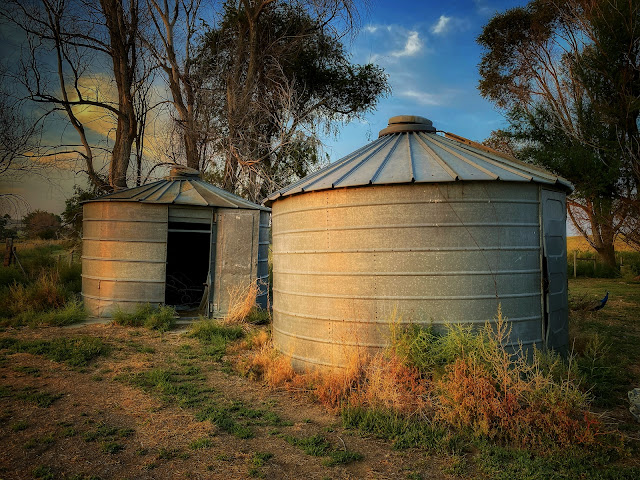
The ranch It’s a smoky dusk in western Nebraska and as the spectral light begins to dissipate, the checklist of laborious chores comes to completion. Life on the ranch is hard as illustrated by battered grain bins and ragged hay bales but at least it’s not winter when the weather is brutal. The rhythm of life revolves around the horse as this beast of burden is indispensable to running a successful cattle ranch. This important work animal must be properly cared for from head to hoof, attending to its nutrition, hygiene and exercise. Weathered boots adorn the fence posts, signifying the passage of another tough year while the smoldering, prairie sunset marks the conclusion of summer. As darkness descends on the home place, the work day comes to an end and the peacocks go to roost.  The horse is indispensable Peacocks go to roost Ragged hay bales Prairie sunset A hard life Life revolves around the horse
Dead Horse Point - Edge of the World

Image
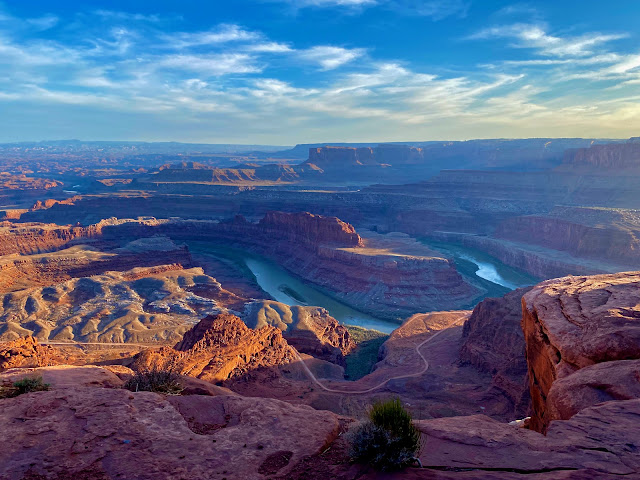
Dead Horse Point, Utah Soaring above the Colorado River and Canyonlands National Park, Dead Horse Point is a photographers paradise featuring sublime subject matter. While hiking along the rim’s irregular contour during the evening, the violet shadows shift restlessly across the staggered buttes. The day’s last sunlight is filtered through a veil of thin clouds, creating dramatic conditions that are infused into the intricate pattern of wild escarpments. The vast expanse weaves luminance, color and form into a bountiful vista of visual delight, overloading the senses. Deeper into dusk, things become more simple and obscure as the distinct shapes lose their edges and melt into a blue atmosphere. I’m not exactly sure how this place got its startling name but I do know that while occupying a remote overlook on the point, it feels like your standing at the edge of the world. A photographer's paradise Violet shadows Wild escarpments Last light Bountiful vista Visual delight A blue atm

Ghost Horse - Colored Pencil Drawing

Image
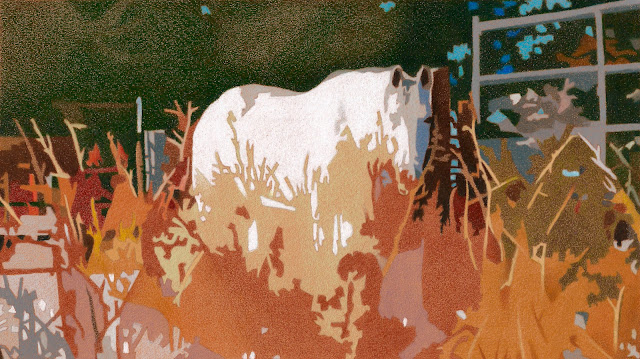
"Ghost Horse" Colored Pencil Floating out of an eerie windbreak, a white apparition confronts the viewer face-to-face. It’s a piercing dawn in the Sandhills as the ghost horse haunts a prairie hacienda. The pale wraith is peaceful and harmless as it drifts through a moat of tall grass. Trying to bridle him in, a rough-hewn stockade is suggested by an irregular grid of interlocking, geometric shapes. Defined by a steel-blue shadow, the phantom’s head is the portrait of simplicity. His shaggy, winter robe is conveyed by the purest of white with touches of cool gray smudged into the shape. With the rapid rise of technology, automation and manufacturing, we creep ever closer to becoming the ultimate, urban civilization. It’s heartening to come home to western Nebraska where vast tracts of ranch land scenery can still be found, summoning the resilient spirit of the Old West.

Warrior Horsemanship - A Reconnection with Nature

Image
Common Sense Horsemanship "A horse is a thing of beauty... none will tire of looking at him as long as he displays himself in his splendor." ~ Xenophon circa 360 BC Clinicians Bern and Kay Miller are traversing the panhandle of Nebraska sharing a common sense approach to horse care with all who will listen. Their well-received demonstrations about Warrior Horsemanship are a fascinating blend of art, history and natural horsemanship. A reconnection with nature is the most important aspect of their philosophy and the principles discussed apply not only to the equine but also humanity. "The natural horse clinicians, they're all into working with horses in a natural kind of way: bitless riding, bridleless riding, a lot of ground work, liberty work - where you put the horse at liberty without a rope on him. They believe we need to get back into natural principles." ~ Bern Miller A central theme running through the movement is the assertion that teaching th

Unicorn - A Magical White Stallion

Image
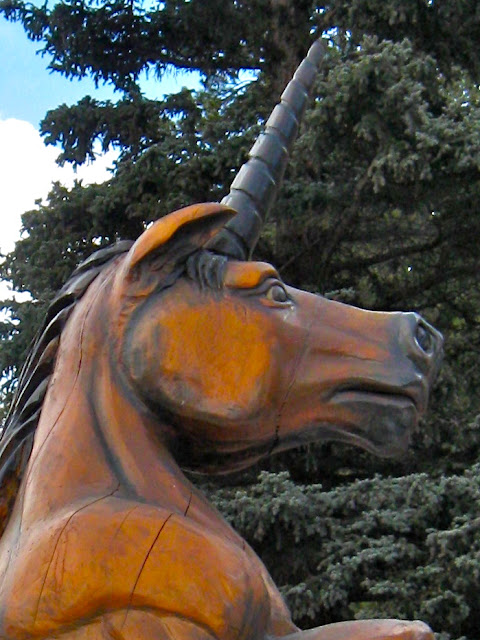
Unicorn Their place in the human imagination is similar to that of dragons, griffins and sea-serpents. The present-day unicorn is portrayed as a magical, white stallion with a long, spiraled alicorn that protrudes from its forehead. Drawings of horses with a single straight horn first appear on the cave walls of Lascaux, France. Later, Aristotle retold stories about the horned wild ass of India, chronicled as a large white horse with a red head, blue eyes and a long black horn. Some believe this mystifying lost species was hunted to extinction during prehistoric times but without a fossil record most scientist suspect the unicorn never existed. During the middle ages scholars were convinced the unicorn was a legitimate, real-life animal. It was thought to be a white beast the size of a donkey with a deer's head, the body of a horse, the tail of a lion, the beard of a goat and cloven hooves. The one reliable account we do have comes from the famous world explorer, Marco Pol

Quarter Horse - An Ideal Cow Pony

Image
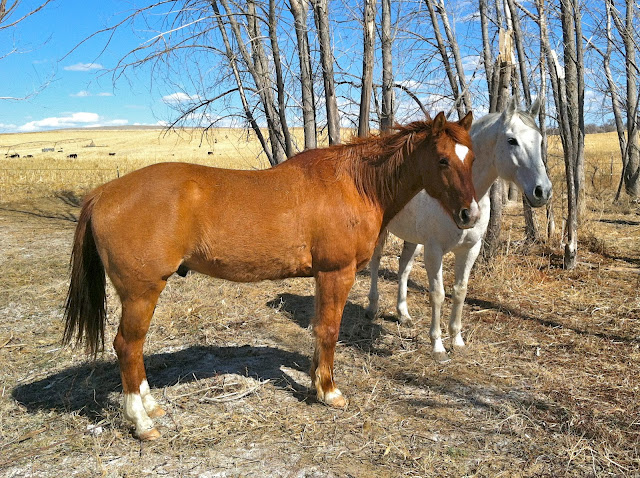
Quarter Horse The American Quarter Horse, sometimes described in more elaborate terms as the famous and celebrated Colonial Quarter Pather, was first bred during the early 1600s in Virginia. The first colonists crossed the imported English Thoroughbred with assorted native horses that descended from Spain and were brought to what is now the Southeastern United States by the Conquistadors. This new breed was small, tough and quick. They were recognized as a versatile work horse during the week and an explosive racehorse on the weekend. The sports-crazy English settlers raced their horses over quarter-mile stretches run through the brush, plantations and villages. Local entrants often triumphed, with some sprinters being clocked at up to 55mph. For this reason the animal became known as the Quarter Horse. In the 19th century, pioneers heading west began crossbreeding the Colonial Quarter Horse with the wild mustangs of the Great Plains. The resulting new breed had an innate "

Horse - Lakota the Appaloosa

Image
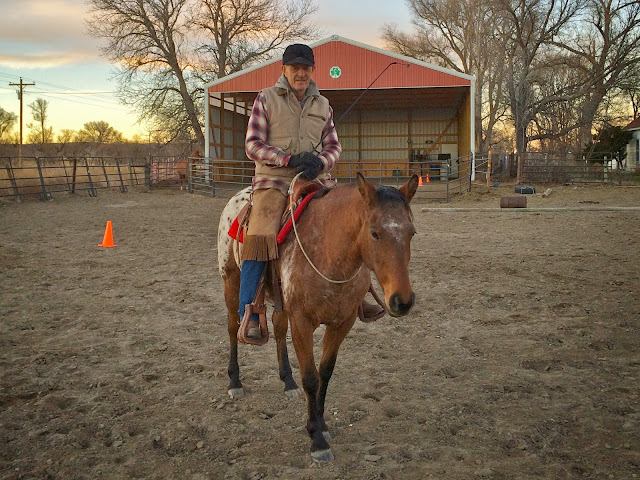
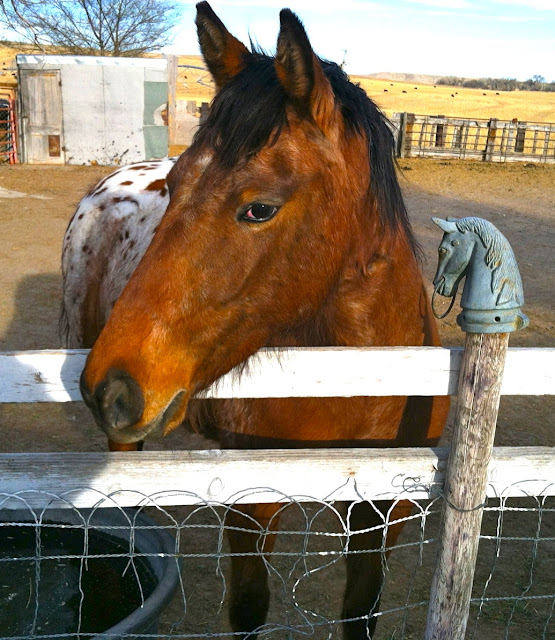
Horse My parents have a small ranch in Western Nebraska where they raise and train horses. This is a picture of an Appaloosa called Lakota. My dad is an authority on Native American Horsemanship and chose the name to honor the extraordinary riders from the Buffalo Nation . By age four Sioux children had mastered riding and how to stand on a horse's bare back. As they grew stronger, the youngsters were taught to shoot arrows and practiced hitting targets from horseback. Mastering such skills became invaluable to the horsemanship required to survive in later years. The Lakota Sioux were a nomadic tribe of plains Indians who relied almost completely on the bison herds to obtain the necessities of life. In 1823 Prince Frederick of Wurtemberg witnessed the hazardous Indian technique for hunting buffalo and was dully impressed: "The Indians are extremely bold and daring riders. This is shown especially in their hunting of the buffalo. In this dangerous work it is often hard