Posts

Showing posts with the label creature

Hooded Merganser - Positively Flamboyant
Image
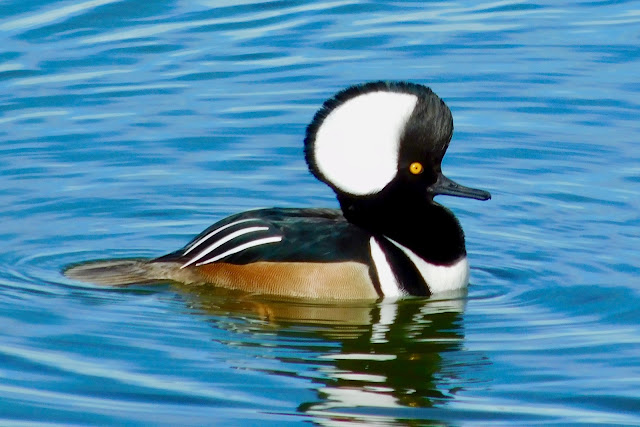
Hooded Merganser The hooded merganser is a secretive creature that prefers to live in a secluded woodland somewhere near a small pond or stream. A mated pair nests in a cavity of either a live or dead tree where the female lays a clutch of seven to fifteen eggs. Remarkably, the fuzzy hatchlings leave the nest within 24 hours after they hatch. Upon reaching open water, the tiny youngsters begin diving and foraging immediately but remain close to mom for warmth and protection. The hooded merganser is a diving predator and the only duck that specializes in capturing fish. They’re able to track down food by sight because their eyes are specially adapted for unsurpassed underwater vision. These speedy, little ducks are found almost exclusively in North America. They must like it here because even during the spring and fall their migration routes are usually just a short distance. Perhaps the most distinguishing characteristic is their striking appearance as both male and female
Red-sided Garter Snake - A Docile Nature

Image
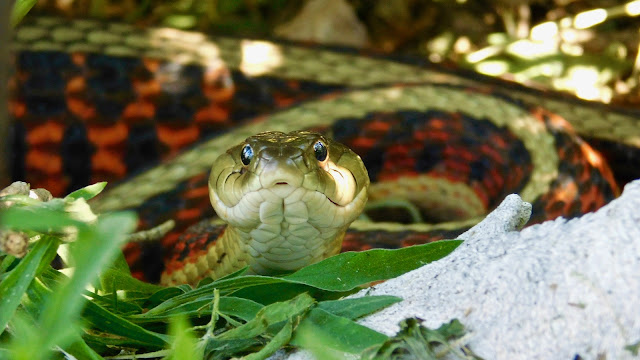
Red-sided Garter Snake Speaking of serpents, with summer in full swing, the reptiles are out searching for sun. Slithering out from the depths of his crowded winter den, a red-sided garter snake spends the afternoon in a shady patch of tall grass. The red-sided garter snake rises early in order to begin regulating his body temperature. He’s warmed up by solar rays and becomes most active in the morning before it gets too hot. He spends much of his time near water because that’s where he finds his favorite foods. This common snake eats earthworms, amphibians, leeches, slugs, snails, insects, crayfish, small fish and other snakes. He’s uniquely immune to the toxic secretions of toads and can eat them without harm. While hunting, the red-sided garter snake uses his superb sense of smell and vision in order to capture prey. He strikes with precision using sharp teeth and quick reflexes thus immobilizing his unfortunate victim. Harmless to humans, his saliva is slightly toxic t

Curious Red Fox - Colored Pencil Drawing

Image
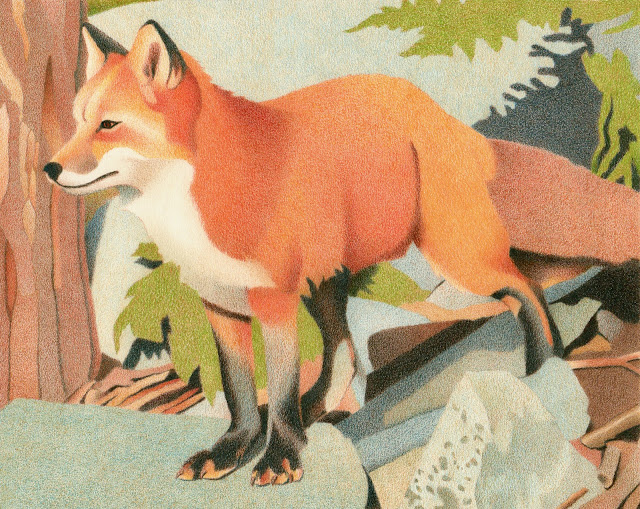
"Curious Red Fox" Colored Pencil A red fox emerges from the lush undergrowth of a dark forest, watching quietly from atop a granite platform. A keen observer of the world around him, this resourceful creature has earned a legendary reputation for intelligence and cunning. The fox is nimble afoot and has remarkable paws built for rough terrain while his black stockings blend impossibly into the vermillion coat. More orange than red, he moves easily through the thick brush and across a rockfall of strewn boulders. Cropped out of the picture, the bushy brown tail lends some balance to the agile critter as well as to the composition. The textured, pine tree trunk is pushed into the background because of its low contrast, enclosing the scene. The depiction is awash in morning light as limber ferns cast a pattern of peculiar shadows across the interior space. This resurrected drawing was freshened up with layers of rich color and completed with cautious realism. The de

Sharp-shinned Hawk - Colored Pencil Drawing

Image
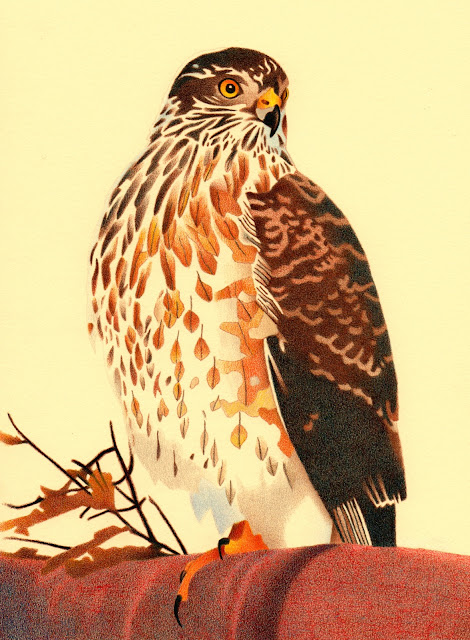
"Sharp-shinned Hawk" Colored Pencil Perched patiently on a rusty fence, a sharp-shinned hawk has appeared in a flash. It’s winter in western Nebraska and a flock of sparrows has congregated in the farmyard, feeding on chicken scratch and corn. Relying on stealth and camouflage, the sharpy prefers ambush to capture its prey. Decorated with a gold-leaf pattern, the pale chest is cloaked by dark wings that are detailed with the suggestion of broad feathers. The raptor’s noble head is a remarkable profile distinguished by streaked spear tips and bright yellow eyes. Just a juvenile, this bird of prey is a natural born hunter that’s still trying to find its place in the forest habitat. The unsuspecting sparrows are easy pickings for this woodland warrior. While living on earth can be a struggle for most of us, it’s not so for the sharp-shin. This confident creature seems to have the world by the tail.

Mule Deer - A Curious Creature

Image
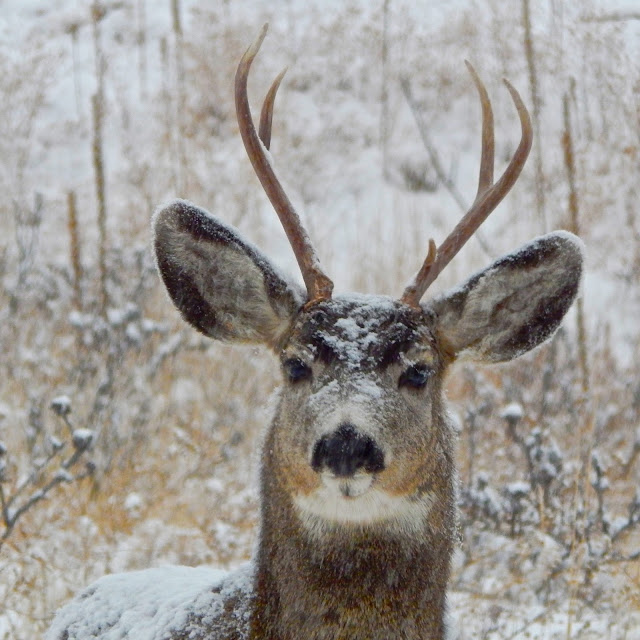
Curious Mule Deer On a wintery afternoon, a hardy visitor unexpectedly appeared out of the mist. A young mule deer buck was out in the meadow foraging for the most nutritious food source available. Munching on mostly shrubs, twigs and tree branches, our famished friend displayed an enormous appetite. On just such a diet, the disheveled deer had managed to survive another harsh winter. As I slushed through snow to document our encounter, the curious creature came even closer. Face to face with a magnificent muley, time stood still during an unforgettable nature moment. I’m not sure what he was thinking. Maybe he thought I had food for him or maybe he wondered why I was out in the middle of a snowstorm. Anyway, after close inspection, he went back to his herd and I went back to mine. An unexpected visitor Foraging for food Munching on shrubs Another harsh winter The curious creature Came closer Face to face with a muley A nature moment

Ornate Box Turtle - A Harmless Homebody

Image
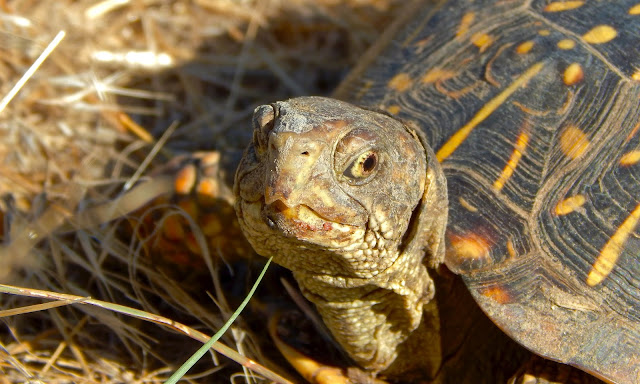
Ornate Box Turtle Inhabiting the arid sandhills of western Nebraska, the ornate box turtle is perfectly content to live life in the slow lane. Sharing some of the same traits as the persistent pioneers that first settled the area, he is admired for his grit, determination and perseverance. The species was first discovered in Nebraska circa 1795 and described by early explorers as occurring in “vast numbers” all across the prairie. Today, their status is uncertain but the population must be at least stable because I frequently see them during the summer. This tortoise is a harmless homebody that doesn’t require much room to roam. Active from April through October, he saunters through the brush existing in a small territory that’s just a few acres in size. By the first frost, he digs a shallow burrow and hibernates over the winter. In his small world there isn’t much competition for available food resources because this easy-going omnivore isn’t a picky eater. His favorite mea

Snail - Bucking Around in the Rain

Image
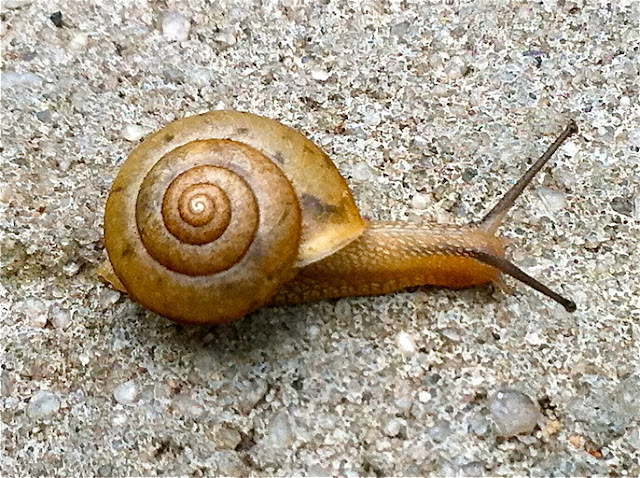
Snail The snail is an ancient mollusk that has been gliding along leisurely for over 600 million years, leaving a trail of glistening slime in its wake. Over such a long period of time, they've adapted to all environments and can be found everywhere on the planet. If a snail dries out it dies, so they secrete mucus to keep their soft bodies moist and to provide a lubricant that enables them to crawl over rough surfaces. Snails are most active at night under the cover of darkness when it's safer and cooler. They have a ferocious appetite and love to consume fruits, vegetables and flowers which frustrates even the most experienced gardeners. They're content to spend their days buried underground avoiding the sun's harmful rays. If the soil becomes saturated from heavy precipitation, and floods their subterranean chambers, hordes of them will emerge from the depths gasping for air. Land snails have lungs and can easily drown in too much water. They appear to delight

King Cobra - An Intelligent Icon

Image
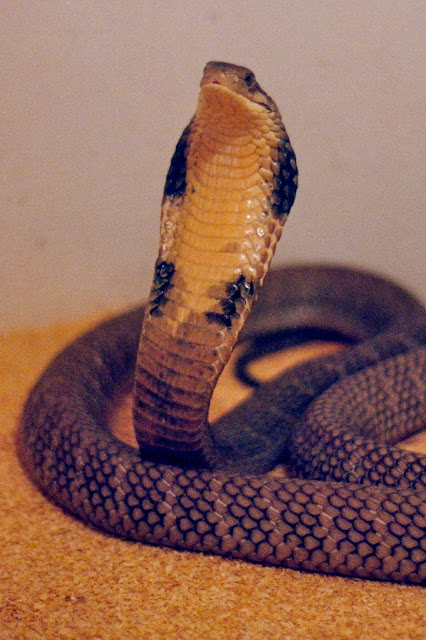
King Cobra King cobras live mainly in the rain forests and plains of India and Southeast Asia. They are comfortable in the trees, on land and in water, feeding mostly on other snakes with the rat snake being their preference. King cobras can reach 18 feet in length, making them the longest of all venomous snakes. Fortunately for us, they are reclusive creatures that will make every attempt to avoid humans. When confronted, though, a king cobra transforms into a lethal adversary. It can raise a third of its body straight off the ground, looking the average person directly in the eyes, and still advance forward to attack. The intimidating snake will flare out its iconic hood and produce a frightening hiss that sounds a lot like a dog's growl. A single bite contains enough venom to bring down an elephant. Scientists are just now beginning to understand how intelligent these snakes really are. The king cobra is believed to possess exceptional memory. According to a myth, the p

Fawn - An Endearing Image

Image
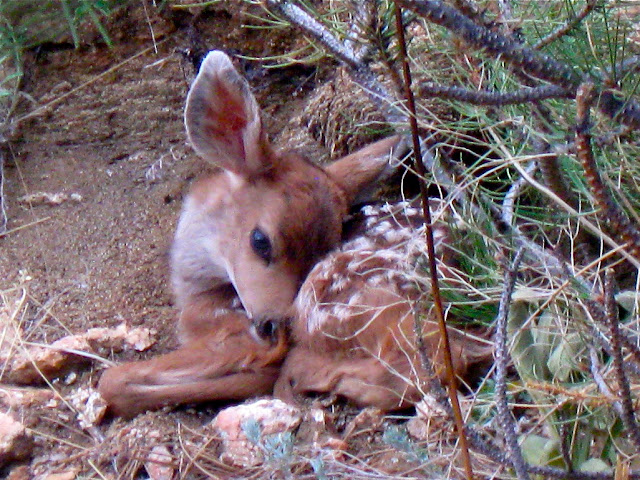
Fawn One of the things I love about living in the mountains is observing the wildlife. We routinely see elk and deer grazing in the townsite. The highlight of every spring is the mule deer doe that comes back to the yard and gives birth to twin fawns. They must feel safe in this locale because they hang out here all summer long. The fawns are up and moving almost immediately as they follow closely behind their mother. If she leaves the area, the little ones are given strict orders to get down and remain still. I've seen them lay and remain completely frozen for several hours. When mom returns, the curious fawns pop back up and continue to explore their surroundings. I was lucky to stumble upon this newborn last June. It's an endearing photo. The fawn was curled up underneath a pine tree, ready to bed down for the night. Because at this early age they are so vulnerable to numerous predators, ochre color tones and white spots allow the fawns to blend superbly into the mo

Western Terrestrial Garter Snake - A Beautiful Creature

Image
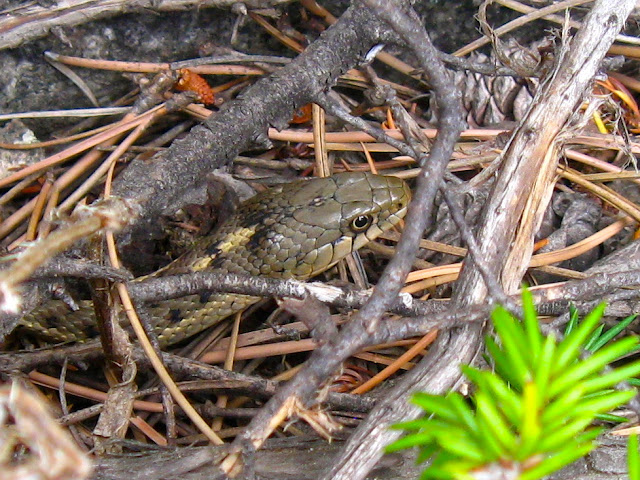
Western Terrestrial Garter Snake I have a fear of heights, but I love to climb mountains. I'm scared of snakes, but I will eagerly handle them. A few days ago while hiking the shoreline of a small mountain lake, we encountered a Western Terrestrial Garter Snake. My first reaction was to recoil in fear. Surprised to see a snake at this elevation, we cautiously observed the reptile for a little bit. He was about two feet long and a striking yellow-gray in color with dark patterns. He appeared fairly harmless. Modern symbolic traditions tend to stress the negative role of the snake - like the fear inducing danger of it's venomous bite. As a teenager in Western Nebraska working on a cattle ranch, we were under direct orders to kill any rattlesnake seen near the homeplace. That's something I couldn't do today. Older legends and myths, however, often include mysterious, positive traits of the snake. The snake is often associated with healing and reincarnation. Nati