Posts

Showing posts with the label wetlands

Riverbend Ponds - An Idyllic Locale
Image
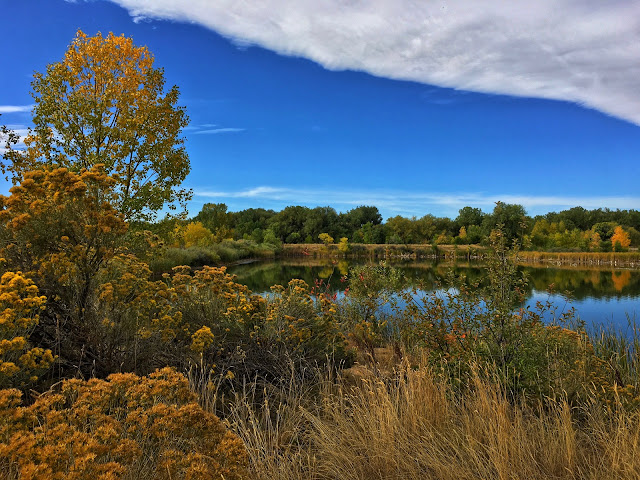
Riverbend Ponds in Fort Collins Nestled below the northern Front Range, Riverbend Ponds is a natural area located on the outskirts of Fort Collins, Colorado. It’s absolutely beautiful this time of year because the surrounding forest is an artist’s palette of autumn colors. The Poudre River and its nearby collection of crystal-clear ponds is a haven for the 200 different species of birds that pass through this wetlands paradise. Dirt pathways criss-cross between the different lakes offering the spectator a delightful perspective from almost anywhere in the park. During a quick hike along the looping, main trail there are white pelicans, blue herons, snowy egrets, Canada geese and mallard ducks. The prettiest part of the marshy ecosystem is the razor-sharp reflections that decorate the water’s smooth surface. The peaceful preserve is an idyllic locale where Longs Peak looms over the picturesque valley. A north wind, characterized by its cold bite, blows down from the big peaks
Wilson's Snipe - A Feathered Phantom

Image
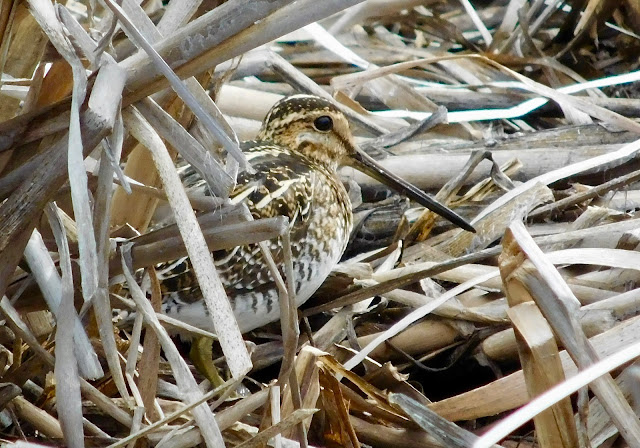
The Wilson's Snipe The reclusive Wilson’s snipe lives in North America but you'd be lucky to ever lay eyes on one. Because of his secretive nature, he’s most active around dusk and dawn while preferring to sleep much of the daytime. When he's awake this plump, little shorebird uses his long, flexible bill to probe in the mud for larvae and earthworms. His unique mandible can move independently upwards allowing him to swallow small prey without having to pull his bill out of the dirt. The Wilson’s snipe is mottled brown overall with a white belly and streaked breast. Dark stripes decorate his head and back. He makes his nest in the wetlands where his drab plumage blends perfectly into the dried, cattail willows. His bill is outrageously long and his eyes are set so far back on his head that he can see not only in front and to the sides but also completely behind. He has short legs and massive flight muscles so when he’s flushed from his safe haven he can explode i

Barn Swallow - A Herald of Spring

Image
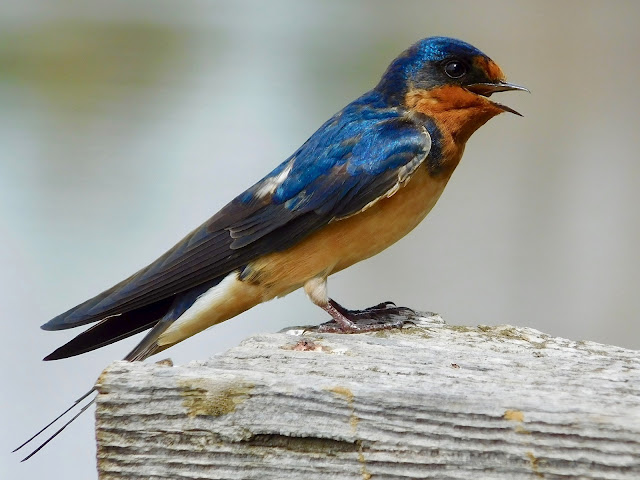
Barn Swallow According to legend, the barn swallow got its forked tail because it stole fire from the gods to bring to humans. An angry deity hurled a fireball at the swallow, burning away it’s middle tail feathers. It has distinguished itself as the most familiar swallow in North America and the most widespread swallow in the world. It’s a welcome neighbor as it eats insects and often builds its mud nest under the eaves of man-made structures. The barn swallow is identified by that deeply forked tail, a vermillion throat and forehead, blue upper parts and ochre underparts. It prefers to live near a river, lake or marsh where it can find its favorite food - bugs. A supreme aviator, the barn swallow displays a spectacular array of acrobatics in order to eat, drink and bathe while still on the wing. It’s truly a free bird whose daring flight is both delightful and unpredictable. The barn swallow is a devoted parent who fiercely defends its young with relentless dive bombing.

Ushering in Spring - An Arctic Landscape

Image
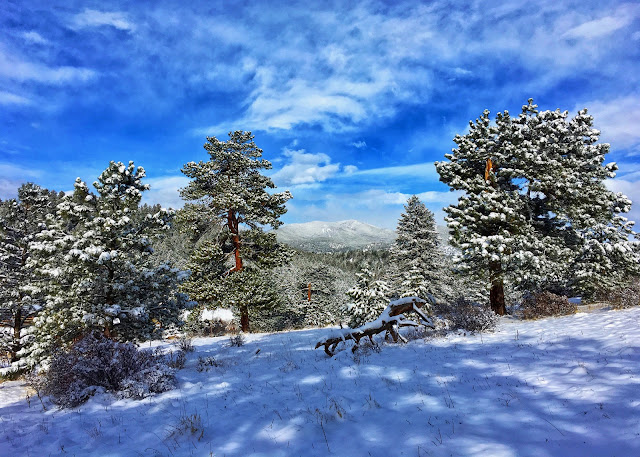
Ushering in Spring A classic seasonal storm swept across the foothills, lengthening an unending stretch of cold and wet. Dawn broke gray and murky as a thick vapor of fog permeated the pine forest, evoking an eerie atmosphere. The illusion of great depth was exaggerated as trees in the distance were placid silhouettes while the nearer rocks revealed a rough texture. An abandoned homestead was barely visible as it melded into the haunted hillside. When the turbulent episode finally hit, the snow came pouring down in sheets of freezing rain transforming the local wetlands into a white valley. Evergreen Lake with its black water, icy shoreline and invisible horizon looked like an Arctic landscape. The only inhabitants to be found on that frigid evening were a few geese whose silent wake shattered the serene reflections. Although a shock to the system, the winter-like weather is not unusual for this time of year. By the morning after, powder blue skies began to reappear and th

Birding at Evergreen Lake - A Kingdom in the Cattails

Image
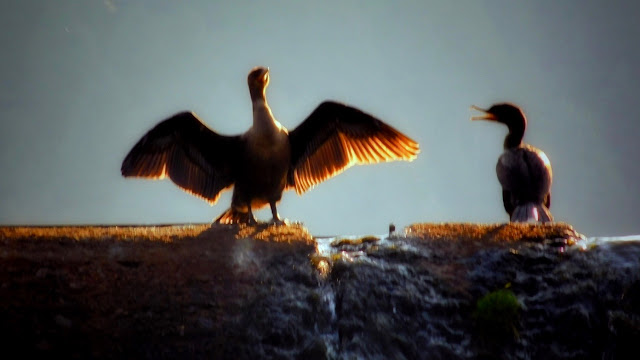
Birding at Evergreen Lake Spread out below Mount Evans, the Front Range foothills are an exquisite parcel in Colorado. There are dark forests, clear creeks, deep canyons and wide open meadows that support a diverse variety of wildlife but if it’s birds you’re looking for, Evergreen Lake is the place to be. Formed when Bear Creek was dammed, the lake is a birder’s heaven centered around a riparian ecosystem that hosts a vast array of feathered friends. Red-winged blackbirds appears to rule the roost from their kingdom in the cattails while barn swallows are masters of flight that own the airspace just above the water’s surface. Of course you’ll see some of the stereotypical waterfowl like Canada geese, crows, mallard ducks and prehistoric cormorants. There are also some more exotic species so on any given day you might see a great blue heron, a rufous hummingbird or a gang of masked bandits called cedar waxwings. At the pond, we’ve also seen a hooded merganser, American dippe

Abundant Wildlife - A Mild Winter

Image
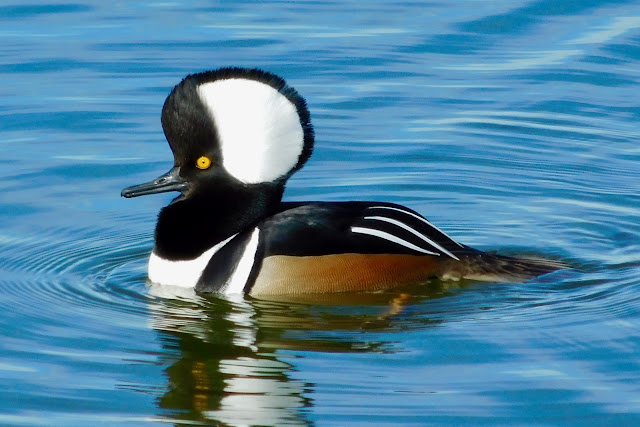
Hooded Merganser at Crown Hill Lake On a warm, winter day at Crown Hill Park in Wheat Ridge, Colorado there was abundant wildlife to watch. The inconspicuous refuge is embedded into the outskirts of a bustling, urban corridor. Upon entering the preserve, a coyote was seen pouncing for voles in the wide swath of grassland that encircles the main lake. The stealthy predator was a beautiful canine that has adapted well to life in the big city. Out of the sky, a steady stream of Canada Geese made a noisy landing at the surface’s icy edge. Some of them slid into the open water where they floated freely while others stayed on shore and tucked their beaks into a wing, taking a quick nap. On that Saturday morning a strange looking bird was a surprise visitor that appeared suddenly onto the scene. I was lucky to observe a group of hooded mergansers, four males and one female, fishing in the frigid reservoir. Such striking birds, the males sported white crests that were fanned out i