Posts

Showing posts with the label conservation

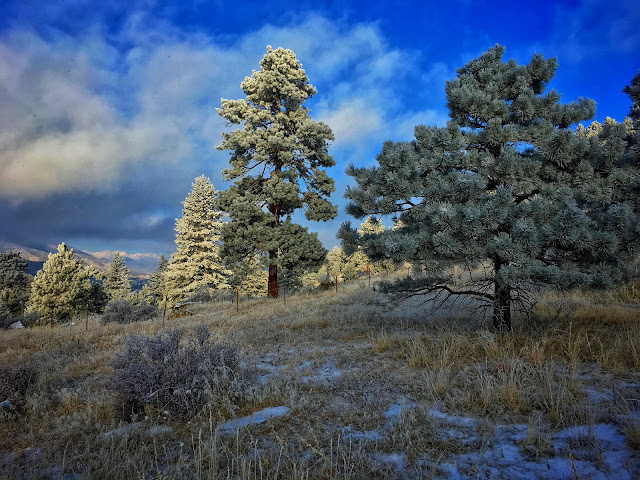
Ponderosa Pine - At Home in the Mountains
Image
Ponderosa Pine This week's post is written by my uncle, Jerry Covault. Jerry is a retired United States Forest Service Ranger. During his 33 years spent working on National Forests in Oregon, Colorado, Wyoming and Montana, he has learned about the relationships between mountains, forests, soils, weather, fire, animals and people. Jerry shares some of his unique experiences in his new book "About Forests and People". He resolves to stimulate interest and curiosity about trees and forests and how people use them both through the ages and at present time. Jerry also discusses the problems our forests and environment have today and he suggests a few things that can help. The following essay by Jerry Covault is taken from his book "About Forests and People". Ponderosa pine is handsome and it gets big. To be in a stand (a foresters’ term) of big ponderosa with their orange plates of thick bark shining in the sun is akin to being in a grand cathedral - be
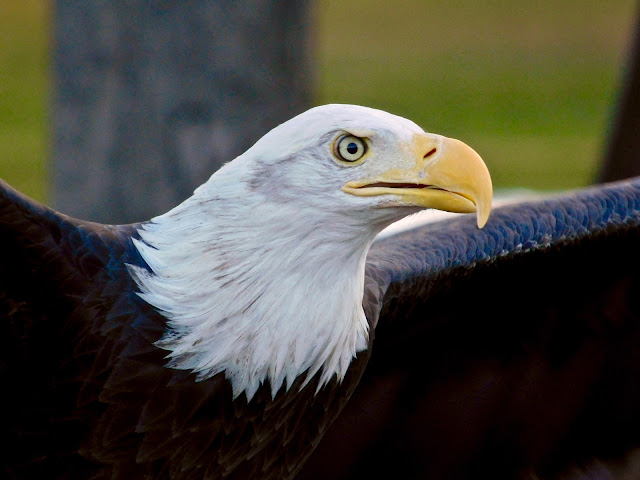
Bald Eagle - A Regal Bird of Prey

Image
Bald Eagle Back in 1872, Benjamin Franklin argued against the Bald Eagle’s nomination as the United States national symbol. The shifty bird’s frequent thievery prompted him to write that the bald eagle “is a bird of bad moral character”. Franklin believed the wild turkey was a better selection because it was “a much more respectable bird”. While it’s true the bald eagle is an opportunistic feeder that will scavenge carrion and steal prey from other raptors, it’s also a fearsome hunter. This huge, dark-bodied bird, with a seven foot wingspan, white head and tail, razor sharp beak, deadly talons and extraordinary yellow eyes is a fish’s worst nightmare. Although seafood is it’s favorite meal, the bald eagle will also strike turtles, snakes, ducks, geese, muskrats and rabbits. The regal bird of prey can only be observed in North America but you can find them just about anywhere on the continent. They build some of the largest stick nests on earth with some measuring eight foot

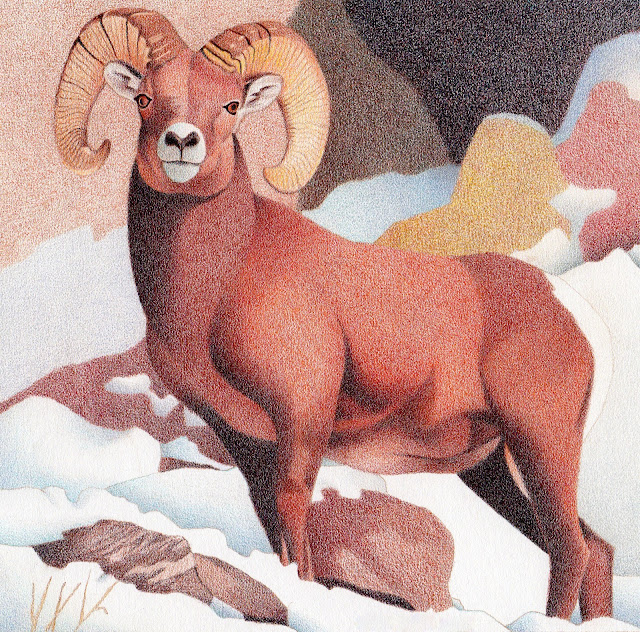
Bighorn Sheep Winter - Colored Pencil Drawing

Image
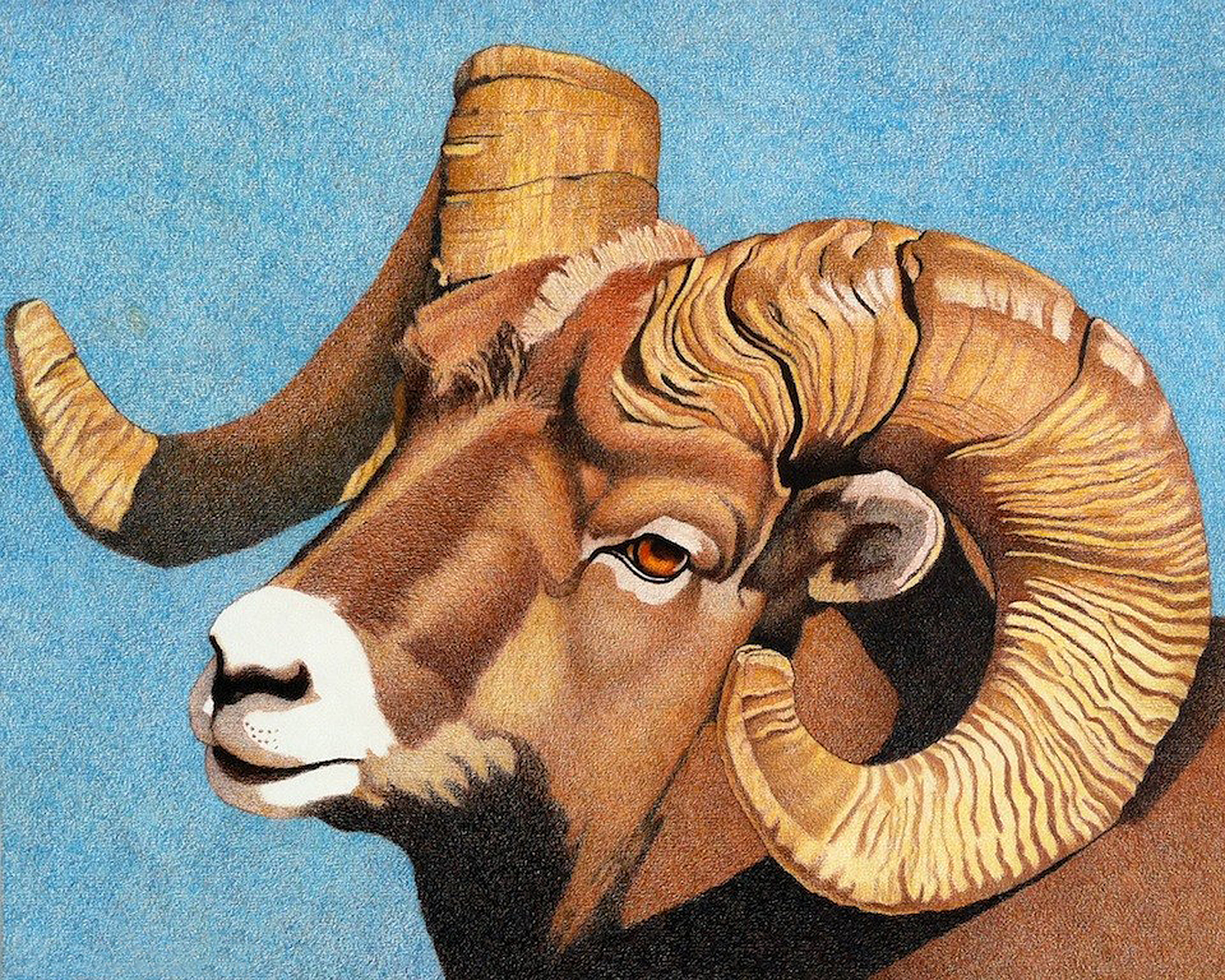
"Bighorn Sheep Winter" Colored Pencil Rocky Mountain thunder cracks across the gray, November sky. Heard for miles around, the stirring echoes are from the violent clash between massive combatants who are desperate to prove their masculine dominance. The battles may last for twenty-four hours but the exhausted victor earns exclusive mating rights. The weapons of choice are the impressive, coiled horns that are the distinguishing feature of Colorado's state symbol, the bighorn sheep. They are the ultimate gladiators built to live along steep ridges and in rugged canyons. This fragile species must also carefully navigate the precipice of extinction as the sheep are extremely sensitive to artificial disturbances in their natural environment. It's a familiar story but the numbers are staggering - before 1800, two million bighorn sheep populated North America. By the year 1900, only a few thousand remained as hunting, loss of habitat and disease spread by introdu

Animal Portraits - San Diego Zoo

Image
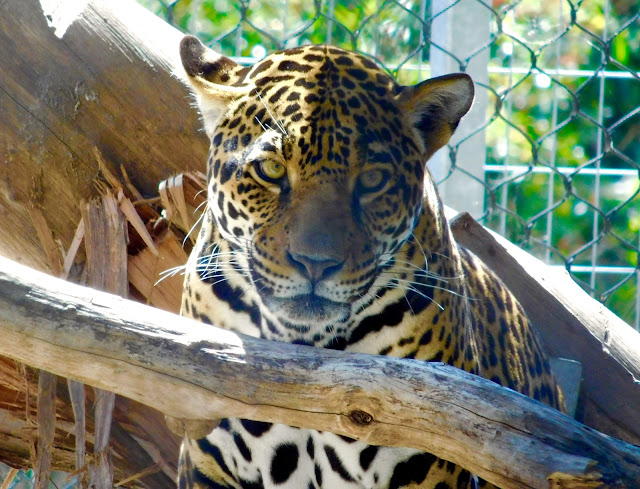
The San Diego Zoo The San Diego Zoo is a beautiful, 100 acre park known for its lush gardens, naturalistic habitats and transcendent animal encounters. It’s an extravagant home to more than 3700 rare and endangered animals representing about 660 different species. During my visit to the seaside sanctuary, I had the chance to observe, in person, animals that I would otherwise never have the privilege to see. It was a bittersweet experience because it hurt my heart to watch as some of the animals suffered from being held in captivity. Ever since I was a young boy, I’ve had a passion for studying wildlife and my parents have passed down to me an acute sensitivity to animal’s feelings. I have a knack for perceiving their joy, curiosity, anger, fear and pain. With camera in tow, I wanted to create an intimate picture of the animals I saw there so I focused on portraiture. Hopefully, the following collection of photos captures the beauty of these innocent creatures and expresses t

Bighorn Sheep - Colored Pencil Drawing

Image
"Bighorn Sheep" Colored Pencil Mountain thunder cracks across the crisp, blue, November sky. The echoes from the violent clash between massive combatants desperate to prove their dominance can be heard for miles around. The battle may last for twenty-four hours but the exhausted victor earns exclusive mating rights. The weapons of choice are the impressive, coiled horns that are the distinguishing feature of Colorado's state symbol, the Rocky Mountain bighorn sheep. Bighorn sheep are ultimate gladiators built to live in the steep ridges and rugged canyons of the mountains. This fragile species must carefully navigate the precipice of extinction as they are extremely sensitive to artificial disturbances in the natural environment. I know it's a familiar story but the numbers are staggering. Before 1800, two million bighorn sheep populated North America. By 1900, after the Western Expansion , only a few thousand remained. Hunting, loss of habitat and disease sp

Zebra - Struggling to Survive in East Africa

Image
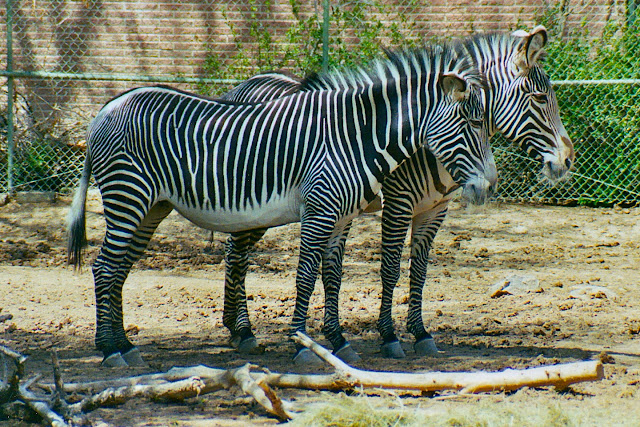
Grevy's Zebra The Grevy's zebra is struggling to survive on the dry savanna of East Africa. They subsist on what meager grasses and shrubs are available in the semi-desert. Water is so scarce that the zebras sometimes have to go five days without a drink. In such a forbidding landscape, social structure is non-existent. It's every creature for itself. The one exception is the lasting bond between mare and foal. A newborn zebra will follow anything that moves so it's imperative for the mother to imprint her own striping pattern, scent and vocalization on the baby. The Grevy's freefall towards eradication began in the 70s as stripes became all the rage in western fashion. Zebras were poached for their striking skins which fetched outrageous prices on the world market. In 1970 there were 15,000 Grevy's zebras in the wild, today there are about 2,000. Rebounding from such a devastating assault has been difficult. The zebras are losing their habitat to increas

Fillius Park - Gateway to the Mountains

Image
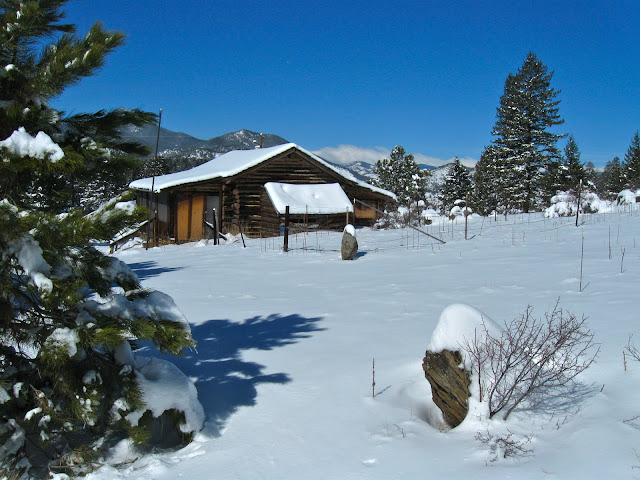
An abandoned cabin is a reminder of the past "Thousands of tired, nerve-shaken, over-civilized people are beginning to find out that going to the mountains is going home; that wilderness is a necessity, and the mountain parks are... fountains of life." ~ John Muir. In the early 1900s, naturalists like John Muir shouted from the mountaintops about the need for conservation. They wanted to make sure America's wilderness treasures were protected from the destruction of Westward Expansion . Heeding Muir's advice, the City of Denver began purchasing land in the mountains to offer an escape from urban stress and provide outdoor recreation opportunities for its city dwellers. Frederick Law Olmstead Jr. designed a series of mountain parks, linked by a network of roads, all within a day's drive of Denver. Consequently, Fillius Park was created as a gateway rest stop for tourists on the way up to Squaw Pass and Echo Lake. Every day on my way home from work, I drive