Lake Isabelle - A Legacy from the Little Ice Age
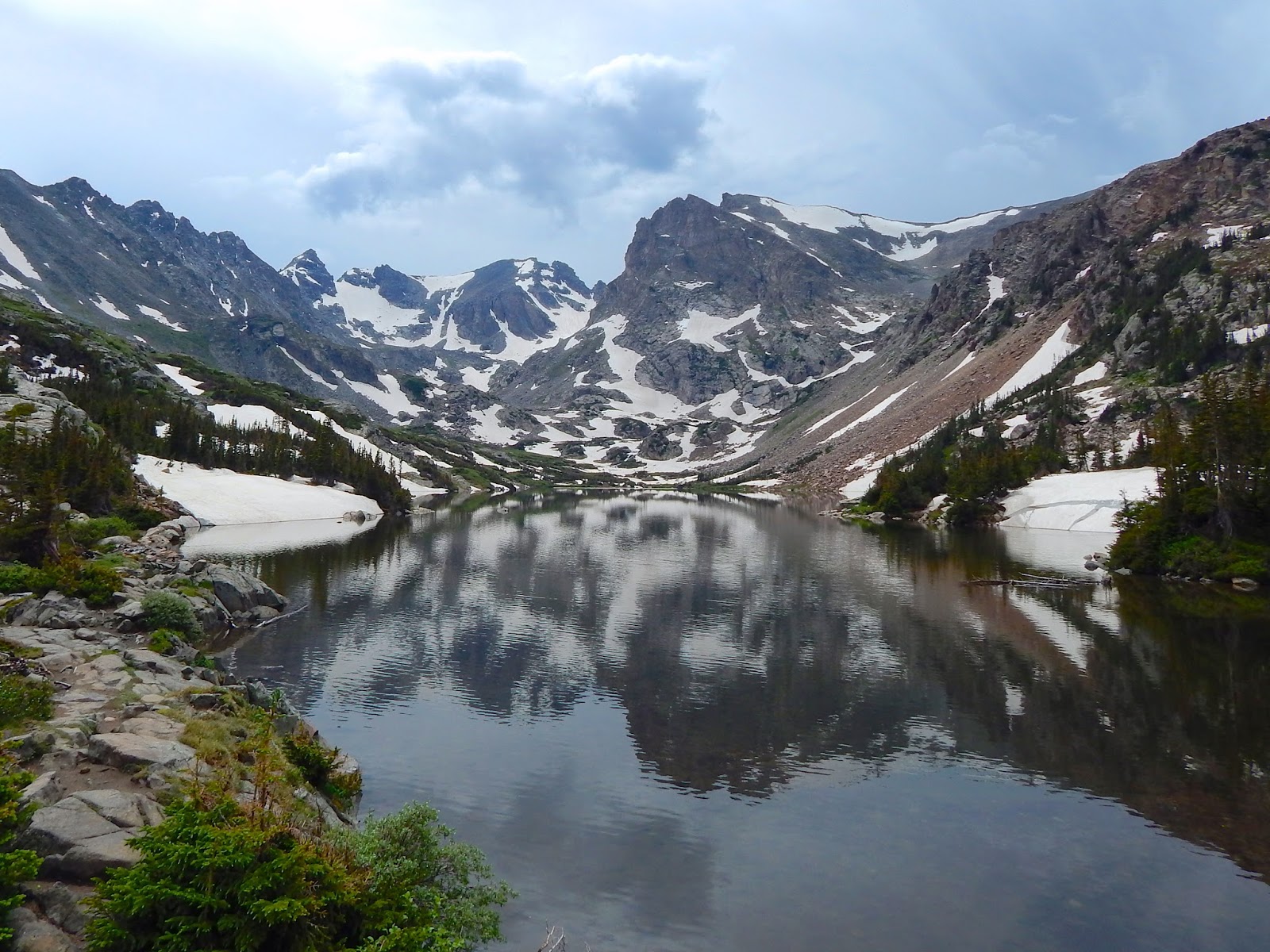
Lake Isabelle About 600 years ago North America experienced a slight cooling that produced colder temperatures, longer winters and increased glaciation. During this Little Ice Age, Colorado's northern Front Range was blasted with precipitation. Year after year heavy snowfall filled the deep, east-facing cirques. Over time, the compressed snow transformed into ice which eventually began creeping down the valleys. The glaciers achieved their maximum extent by 1850, then the climate began warming again. The rebellious rivers of ice have been retreating back up into the mountains ever since, leaving rugged crags and turquoise tarns in their wake. There are only fourteen named glaciers left in Colorado today. Born from the melted ice of Isabelle Glacier, Lake Isabelle is a precious legacy from the Little Ice Age. The bowl of frigid water is contained by a steep-walled basin at the top of a spectacular, flower-infused valley. Jagged peaks are crowded around the shimmering jewel,