Posts

Showing posts with the label blog

Verreaux's Eagle-Owl - A Proxy for Witches
Image
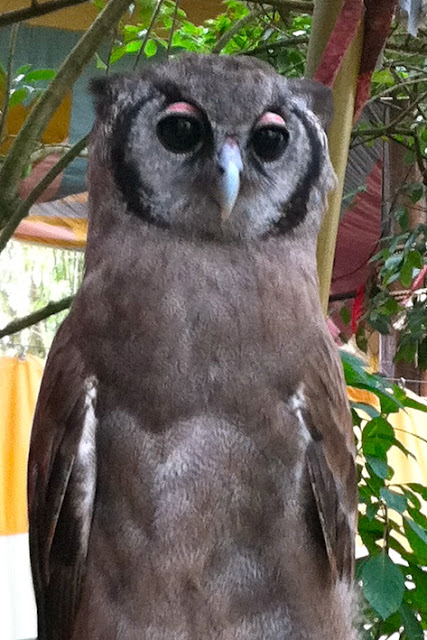
Verreaux's Eagle-Owl Another legendary creature, this one lives in the dry savanna and open woodlands of South Africa. The Verreaux's eagle-owl is considered a proxy for witches and sorcerers. The arrival of an eagle-owl at one's homestead is viewed by the superstitious as a bad omen. Many people in the rural communities put spikes on the roofs of their homes to prevent owls from landing on them at night. In this part of the world, it's a well known fact that if an eagle-owl takes up residence in an urban setting, the local, domestic cat population will become decimated. The Verreaux's is the largest owl in Africa and it's distinguished by noticeable pink eyelids. In a land teeming with formidable predators, this winged giant is absolutely lethal. Despite it's massive size, the eagle-owl is remarkably agile. It's perfectly capable of taking small birds on the wing and it's been seen wading through water snagging fish. These robust birds of pr
Unicorn - A Magical White Stallion

Image
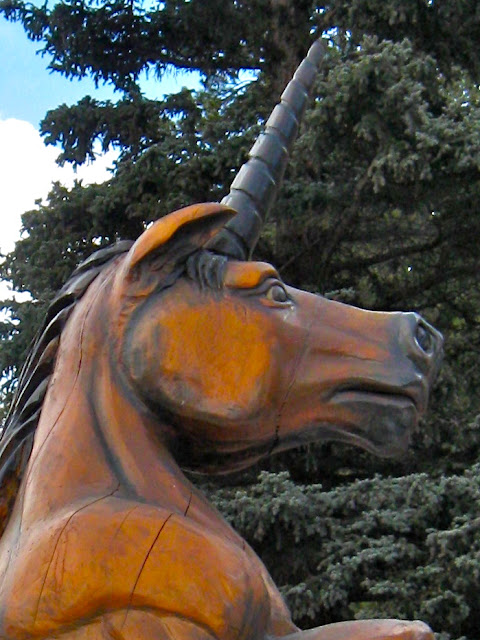
Unicorn Their place in the human imagination is similar to that of dragons, griffins and sea-serpents. The present-day unicorn is portrayed as a magical, white stallion with a long, spiraled alicorn that protrudes from its forehead. Drawings of horses with a single straight horn first appear on the cave walls of Lascaux, France. Later, Aristotle retold stories about the horned wild ass of India, chronicled as a large white horse with a red head, blue eyes and a long black horn. Some believe this mystifying lost species was hunted to extinction during prehistoric times but without a fossil record most scientist suspect the unicorn never existed. During the middle ages scholars were convinced the unicorn was a legitimate, real-life animal. It was thought to be a white beast the size of a donkey with a deer's head, the body of a horse, the tail of a lion, the beard of a goat and cloven hooves. The one reliable account we do have comes from the famous world explorer, Marco Pol

Tortoise - A Pair of Russian Refugees

Image
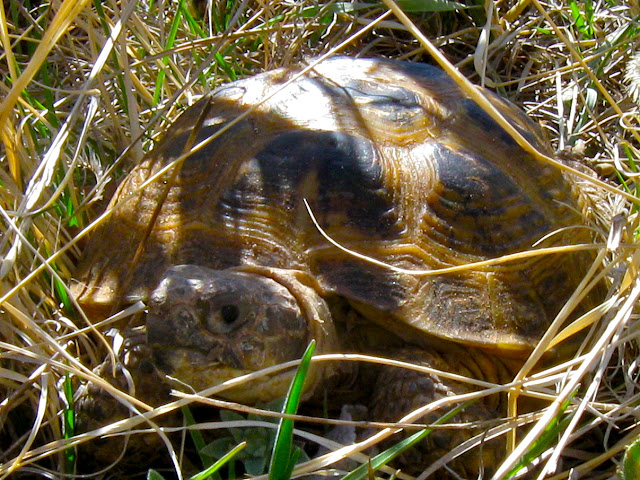
Russian Tortoise Russian tortoises are found in arid, open landscapes with sparse vegetation. They have adapted well to life in Uzbekistan's high, mountain desert but in order to survive in such a harsh place, they're only active from March until June. They hibernate during the winter and aestivate through the hottest part of the summer. Recently their world has been turned upside down. Russian Tortoises are being captured, heaped into crates without food or water, and shipped to the United States. Brand name stores confine them into small glass tanks and then sell them to pet-loving Americans. We are currently providing a sanctuary for two such refugees that were bestowed upon us as a gift. We've created a large indoor enclosure but they prefer to be in the outdoor pen foraging for their favorite food, dandelions. Despite the unfortunate circumstances, the tortoises appear to be healthy and happy. Our dry, mountain habitat probably reminds them of home. They'r

Snail - Bucking Around in the Rain

Image
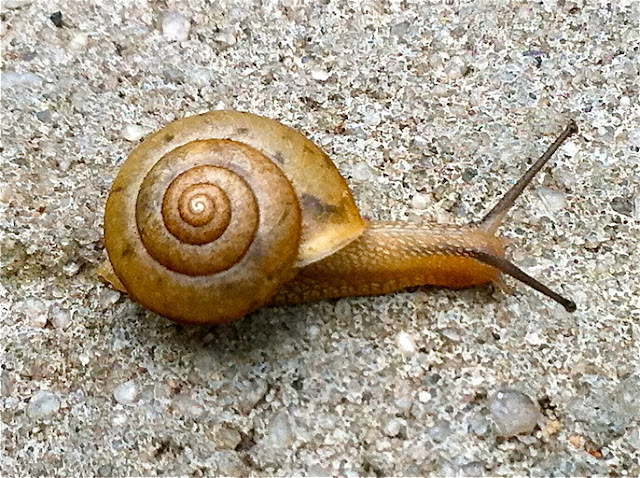
Snail The snail is an ancient mollusk that has been gliding along leisurely for over 600 million years, leaving a trail of glistening slime in its wake. Over such a long period of time, they've adapted to all environments and can be found everywhere on the planet. If a snail dries out it dies, so they secrete mucus to keep their soft bodies moist and to provide a lubricant that enables them to crawl over rough surfaces. Snails are most active at night under the cover of darkness when it's safer and cooler. They have a ferocious appetite and love to consume fruits, vegetables and flowers which frustrates even the most experienced gardeners. They're content to spend their days buried underground avoiding the sun's harmful rays. If the soil becomes saturated from heavy precipitation, and floods their subterranean chambers, hordes of them will emerge from the depths gasping for air. Land snails have lungs and can easily drown in too much water. They appear to delight

Red Fox Kit - They Grow Up So Fast

Image
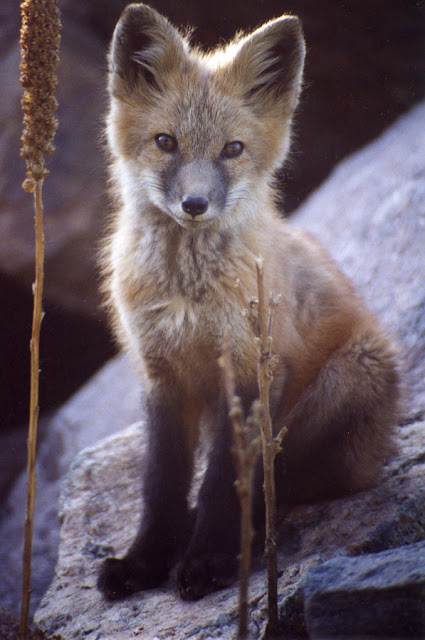
Red Fox At Evergreen we always have a few weeks of bad weather during the transition between winter and spring. It's usually cold, very windy and includes a wet rain/snow mix. It can turn the spring sports practices into a miserable experience. That's how it was a couple of years ago when my son played baseball in Idaho Springs, Colorado. After dropping him off, we'd wander along the banks of Clear Creek and scramble across the smooth boulders strewn throughout the canyon. We met the little fox pictured above during one of our baseball-practice-time-kiling-excursions. The den we discovered was a network of cracks, crevices, holes and tunnels located within a jumble of gray rocks. There were three kits, each with a different personality. One was cautious and shy, one was serious and aloof and the other was curious and rowdy. We spent many cool, damp hours observing them at rest and at play. After a while, they seemed to accept our presence so I was able to get lots

Quarter Horse - An Ideal Cow Pony

Image
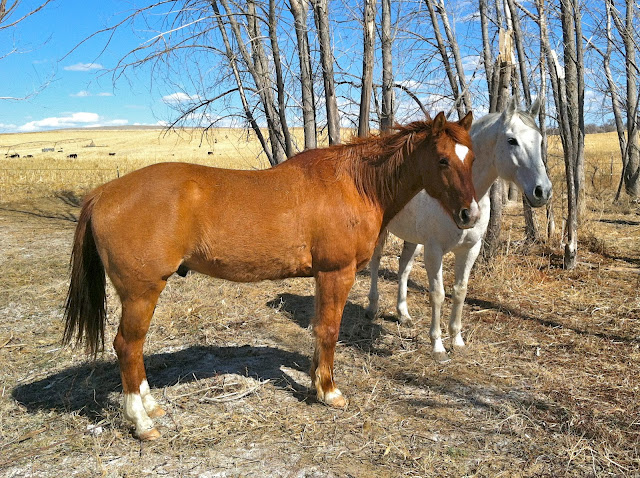
Quarter Horse The American Quarter Horse, sometimes described in more elaborate terms as the famous and celebrated Colonial Quarter Pather, was first bred during the early 1600s in Virginia. The first colonists crossed the imported English Thoroughbred with assorted native horses that descended from Spain and were brought to what is now the Southeastern United States by the Conquistadors. This new breed was small, tough and quick. They were recognized as a versatile work horse during the week and an explosive racehorse on the weekend. The sports-crazy English settlers raced their horses over quarter-mile stretches run through the brush, plantations and villages. Local entrants often triumphed, with some sprinters being clocked at up to 55mph. For this reason the animal became known as the Quarter Horse. In the 19th century, pioneers heading west began crossbreeding the Colonial Quarter Horse with the wild mustangs of the Great Plains. The resulting new breed had an innate "

Peacock - Sacred to the Gods

Image
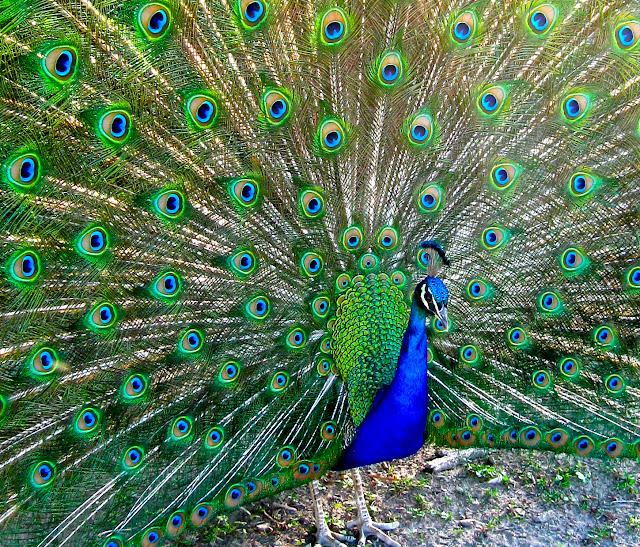
Peacock A long time ago, the peacock was discovered in the remote rain forests of India. The dignified bird with such dazzling colors was declared to be sacred to the gods. For centuries they were allowed to roam undisturbed through the magnificent gardens of Indian royalty. The Phoenicians later exported them to complement the imposing architecture of the Egyptian pharoahs. The Bible informs us that King Solomon used to order his powerful navy every three years to go out and restock his supplies of gold, silver, ivory and peacocks. With such an exotic history, the last place one would expect to find peacocks is in the arid sandhills of Western Nebraska. In addition to riding horses and gardening flowers, my mom raises peafowl. Whenever I get back home, I'm awakened each morning by their haunting call. Every spring, I'm lucky to witness their extravagant, courtship display. The image of these birds sweeping majestically across my parent's green lawn is an abiding

Ostrich - A Massive, Flightless Nomad

Image
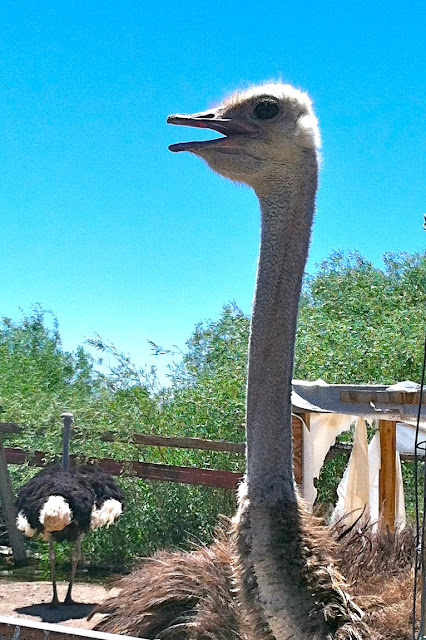
Ostrich Yesterday we learned about a tiny, hyperactive movie star from Colorado. Today features a massive, flightless nomad from Africa. Ostriches are world famous for their "buried-head" hiding strategy. When an ostrich senses imminent danger and can't run away, it flops to the ground and remains frozen with its head and neck pressed against the earth in front of it. Because the head and neck are pale, it appears to blend in with the soil which makes it look like the bird has buried its head in the sand. This bird isn't quite the brainless coward that it's sometimes made out to be, though. It's fully capable of protecting itself on the open savanna. Ostriches have elongated necks and excellent vision so they can see forever and identify dangerous threats from a great distance. Powerful legs propel them to 40 mph and if confronted, a single forward kick can be fatal to even Africa's most lethal predators, such as the cheetah, lion, hyena or leopard.

Nuthatch - An Energetic Songbird

Image
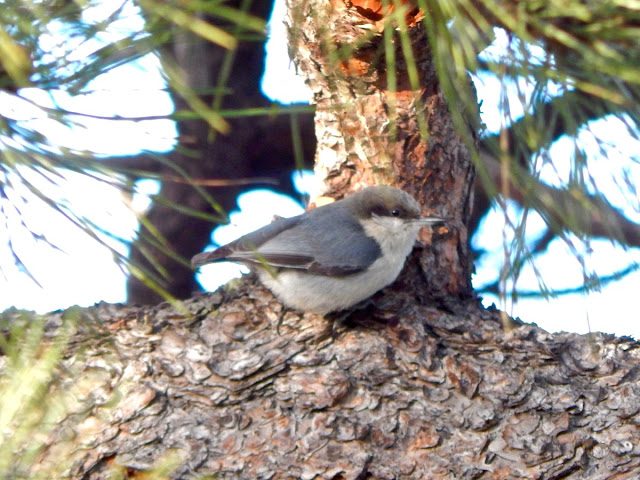
Pygmy Nuthatch The pygmy nuthatch is an energetic, little songbird that lives in old, ponderosa pine tree forests. They twitter about the trunks and branches searching beneath the bark and in needle clusters for insects and seeds. Sometimes they even creep along the tree upside down just like the bigger nuthatches. Pygmy nuthatches are also highly social, they travel in large, noisy groups that often mix with chickadees and juncos. They roost communally in the cavities of dead conifer snags. On cold, winter nights as many as 100 birds have been seen huddled together in a single nest. In an unexpected pop culture reference, the pygmy nuthatch plays a key role in the ending of the Charlie's Angels movie. Cameron Diaz's character, Natalie, discovers the location of the evil villains' secret fortress by identifying the distinctive call of a pygmy nuthatch.

Mountain Lion - The Ultimate Predator

Image
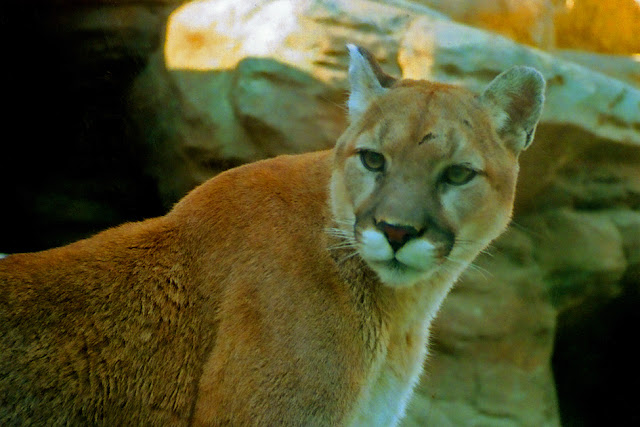
Mountain Lion I've never been lucky enough to observe a mountain lion in the wild but they're rarely glimpsed by anyone. Mountain lions are extremely reclusive being most active between dusk and dawn. The big cats live a solitary life, prowling from rocky ridges to deep canyons always fiercely protective of their precious territory. This ultimate predator will wait patiently in a ponderosa pine tree then leap onto the shoulders of a mule deer and bite deep into the back of its neck near the base of the skull. The carcass is usually cached and the cat comes back to feed later. There are only two animals in our area that I truly fear, a bull elk during the rut and a mountain lion. Hungry young lions, unable to secure their own territories, have become bolder around people and are taking more risks. Recently near here, a brazen mountain lion actually crept inside a home while its occupants slept and snatched the pet dog. Attacks on humans are extremely rare but small child

Lorikeet - An Australian Marigold

Image
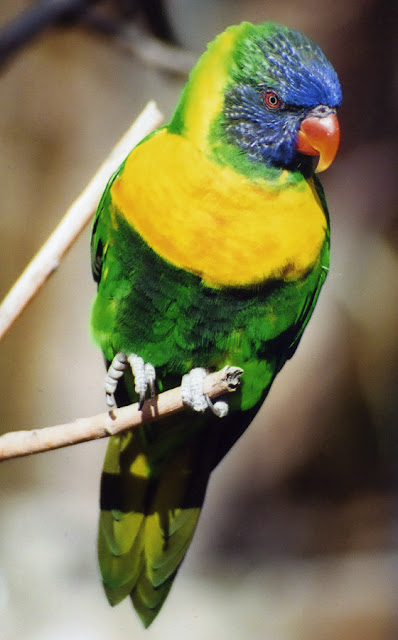
Marigold Lorikeet The rainbow lorikeet is one of the most beautiful species of parrot. They're widespread in the coastal bush lands and rain forests of Australia, Indonesia, New Guinea and the Solomon Islands. Lorikeets have specialized, brush-tipped tongues used for feeding on nectar and soft fruits. They're cute but they can be aggressive and are considered pests in some places because of the damage they inflict on the fruit orchards. The lory pictured above is a marigold lorikeet, a subspecies of the rainbow. Lorikeets are hyperactive and have gregarious personalities. They are delighted to clown around in exchange for treats from an attentive audience and they'll happily pose for the camera. Sadly, lories have become popular pets even though their moodiness, messiness and loudness are not very compatible with confinement.

King Cobra - An Intelligent Icon

Image
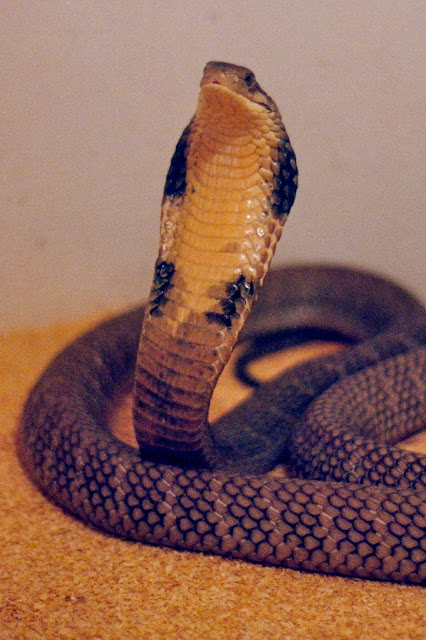
King Cobra King cobras live mainly in the rain forests and plains of India and Southeast Asia. They are comfortable in the trees, on land and in water, feeding mostly on other snakes with the rat snake being their preference. King cobras can reach 18 feet in length, making them the longest of all venomous snakes. Fortunately for us, they are reclusive creatures that will make every attempt to avoid humans. When confronted, though, a king cobra transforms into a lethal adversary. It can raise a third of its body straight off the ground, looking the average person directly in the eyes, and still advance forward to attack. The intimidating snake will flare out its iconic hood and produce a frightening hiss that sounds a lot like a dog's growl. A single bite contains enough venom to bring down an elephant. Scientists are just now beginning to understand how intelligent these snakes really are. The king cobra is believed to possess exceptional memory. According to a myth, the p

Junco - A Woodland Snowbird

Image
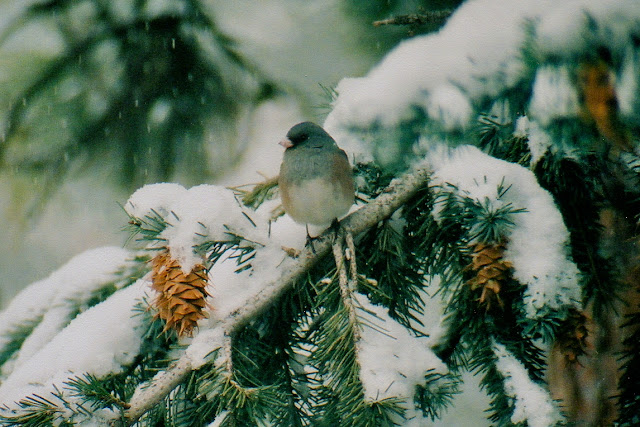
Dark-eyed Junco A dark-eyed junco is perched on an evergreen branch during a spring snowstorm. A year-round resident in Colorado, they are also sometimes called snowbirds because of their sudden, histrionic appearance below winter bird feeders. When it gets really cold, we see them mixed in with other small, seed-eating birds such as chickadees and nuthatches. Dark-eyed juncos are uncommon sparrows because they spend so much time on the ground. They nest on the forest floor and hop around the bases of trees and shrubs searching for fallen seeds. When flushed, their distinctive, bright-white tail feathers are flashed during takeoff. Juncos also have a unique call that is described by a Mrs. Lawrence in a note to famous ornithologist Arthur Cleveland Bent: "The lovely tinkling chorus by the juncos in early spring, as if a myriad of woodland sprites were shaking little bells in an intensive competition."

Ibis - A Symbol for Danger and Optimism

Image
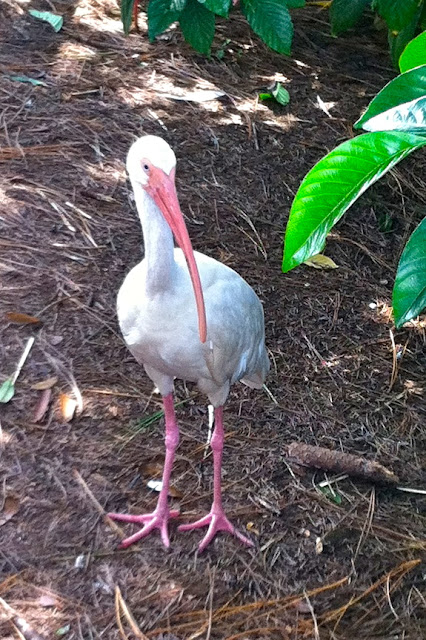
White Ibis The white ibis is a wading bird that is very common throughout Florida. Their traditional habitat has always been the Everglades but they've recently adapted to a more urban environment. During our visit there this past summer, we frequently saw ibises on freshly mowed lawns rooting for large bugs as well as stalking aquatic prey along the shoreline of ponds, lakes and marshes. These splendid, white birds have evolved a long, downward-curved bill. This distinctive feature has helped them develop into efficient hunters. Their legs are long enough to wade in shallow water but they are also perfectly at home on dry land where they can use their pink beak to probe for insects. The white ibis is a symbol for danger and optimism because Native American folklore held that the bird was the last to seek shelter before a hurricane and the first to emerge afterwards.

Horse - Lakota the Appaloosa

Image
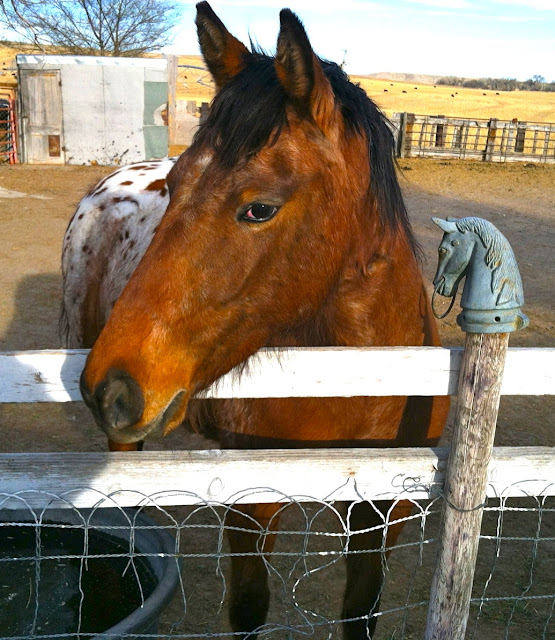
Horse My parents have a small ranch in Western Nebraska where they raise and train horses. This is a picture of an Appaloosa called Lakota. My dad is an authority on Native American Horsemanship and chose the name to honor the extraordinary riders from the Buffalo Nation . By age four Sioux children had mastered riding and how to stand on a horse's bare back. As they grew stronger, the youngsters were taught to shoot arrows and practiced hitting targets from horseback. Mastering such skills became invaluable to the horsemanship required to survive in later years. The Lakota Sioux were a nomadic tribe of plains Indians who relied almost completely on the bison herds to obtain the necessities of life. In 1823 Prince Frederick of Wurtemberg witnessed the hazardous Indian technique for hunting buffalo and was dully impressed: "The Indians are extremely bold and daring riders. This is shown especially in their hunting of the buffalo. In this dangerous work it is often hard

Grizzly Bear - Ghosts of Colorado

Image
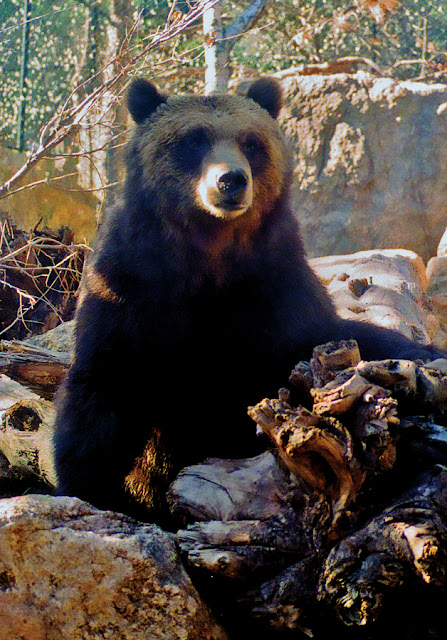
Grizzly Bear The grizzly bear is North America's most fearsome predator. Grizzlies once thrived in Western Colorado before white settlers and trappers arrived. By the late 19th century the bears were terrorizing rancher's livestock and threatening to impede civilized progress. A government-funded program was initiated to exterminate the perceived nuisance. After a massive assault, the last grizzly in Colorado was snared and killed by a federal trapper in 1952. Ursus arctos horribilis was assumed to no longer inhabit the state. Then, in the fall of 1979, a lone grizzly attacked a hunting guide near Pagosa Springs. The controversial account of what happened ends with the bear being killed in self-defense. Some people believe a tiny sleuth of grizzlies still inhabit a remote pocket of the South San Juan Wilderness. David Peterson, area resident and author of "Ghost Grizzlies" laments they are probably gone: "If there are any grizzly bears left in Colorado,

Fawn - An Endearing Image

Image
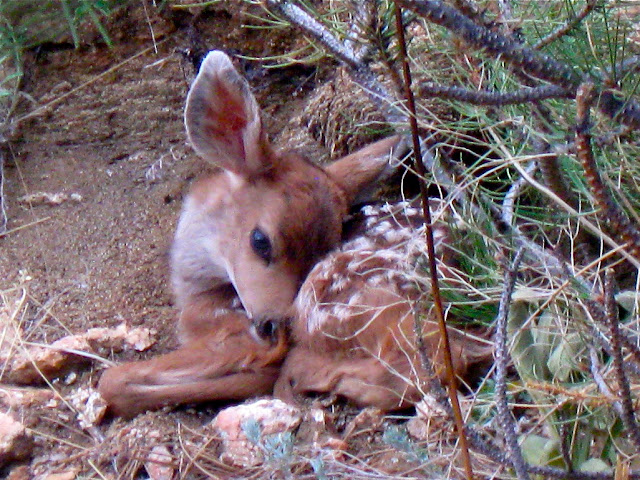
Fawn One of the things I love about living in the mountains is observing the wildlife. We routinely see elk and deer grazing in the townsite. The highlight of every spring is the mule deer doe that comes back to the yard and gives birth to twin fawns. They must feel safe in this locale because they hang out here all summer long. The fawns are up and moving almost immediately as they follow closely behind their mother. If she leaves the area, the little ones are given strict orders to get down and remain still. I've seen them lay and remain completely frozen for several hours. When mom returns, the curious fawns pop back up and continue to explore their surroundings. I was lucky to stumble upon this newborn last June. It's an endearing photo. The fawn was curled up underneath a pine tree, ready to bed down for the night. Because at this early age they are so vulnerable to numerous predators, ochre color tones and white spots allow the fawns to blend superbly into the mo

Elk - A Symbol of Evergreen

Image
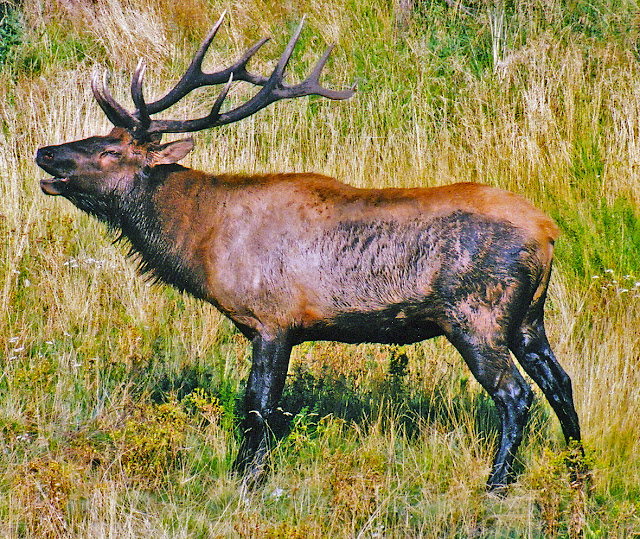
Elk The Rocky Mountain Elk is the undisputed symbol of Evergreen, Colorado. I see them almost every day so I've become very familiar with their ways. The elk's predictable, seasonal behavior provides me with some comfort during these uncertain times. There is a rhythm to their life that influences our own. The elk seem to tolerate our intrusion into their habitat as they go about their routine seemingly oblivious to the human activity happening all around them. From a careful distance, I took this picture of an agitated elk during the annual, fall rut. Mud-soaked and lathered into a frenzy, this bull is in his prime. He bellows loudly to other rivals and cows as a signal that he is defining his territory and claiming his harem. Evergreeners have learned how to live with the elk by developing creative techniques to protect their trees, gardens and bird feeders, and by driving cautiously, especially after dark.

Duck - The Mallard is a Cordial Neighbor

Image
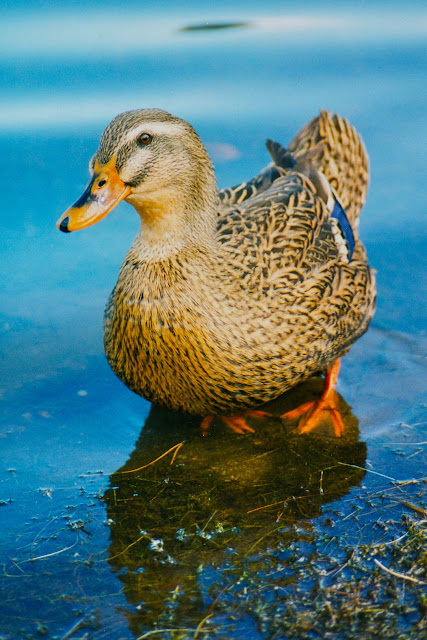
Duck It's an iconic image, a glossy-green-headed drake flying above the lake on a summer morning, then skimming across the surface for a splash landing. Next, the quintessential duck call that is the mallard's quack. I snapped this picture of a glistening duck at Evergreen Lake. The mallard duck is a very common bird around here. The female is a mottled, drab-brown that camouflages the duck while nesting. The most conspicuous feature is the iridescent, blue-violet stripes of color that can be seen on her wing. It's fun to watch them employ two completely different but equally humorous feeding strategies. Head dipping is when they become completely upended with only their rump sticking out of the water. They don't dive but rather spend their time dabbling for food. If that isn't working, they take full of advantage of their neighborly relationship with humans. They waddle out of the water and cordially ask for food.

Canada Goose - An Unappreciated Beauty

Image
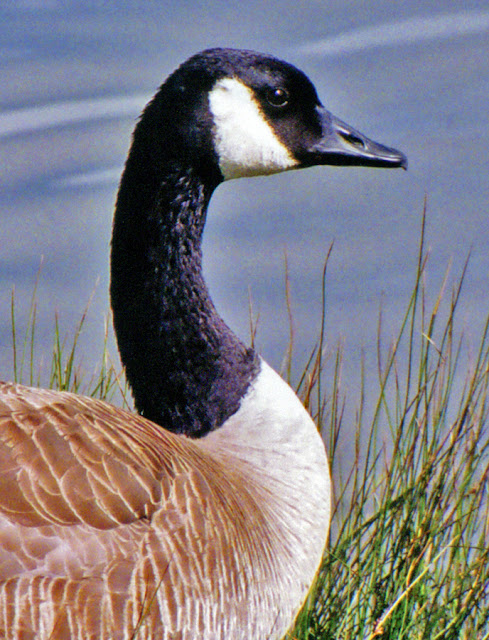
Canada Goose Every year after the Buchanan Ponds' icy water thaws, the same flock of Canada Geese reappears and trumpets the arrival of spring. They settle in right away and begin nesting immediately. They are comfortable enough to stay here all summer long. Through the molting season, an eight to ten week flightless period when a goose sheds and then replaces its primary flight feathers, the vulnerable bird must be near water so that it feels safe from predators. This protective mother had four goslings and she hissed threateningly whenever we approached them. I shot this portrait of her on a warm summer day while she was grazing on the grassy banks of one of the ponds. A pure white chin strap accents the sleek, black head and neck. The beautiful, brown patterning on the back and wings make it an elegant looking bird. Because these large waterfowl have become so common and are sometimes considered a pest, I think their striking appearance often goes unappreciated.